Drones
Patroller: the Hellenic Army’s large new drone that flies for more than 15 hours
Safran’s Patroller, the long-endurance drone the Hellenic Army bought through NSPA, appeared on a truck at the Thessaloniki parade. What it is, what it carries and the questions it raises.

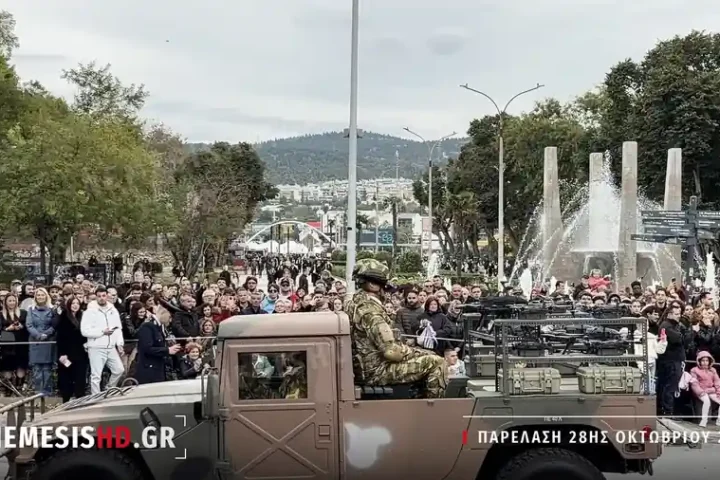
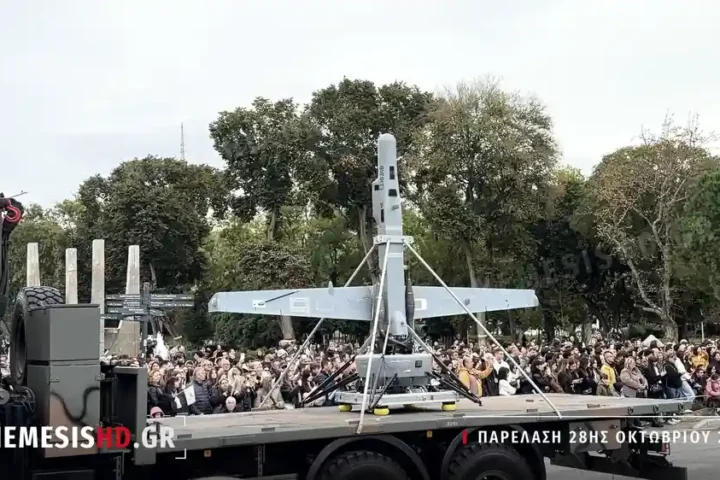
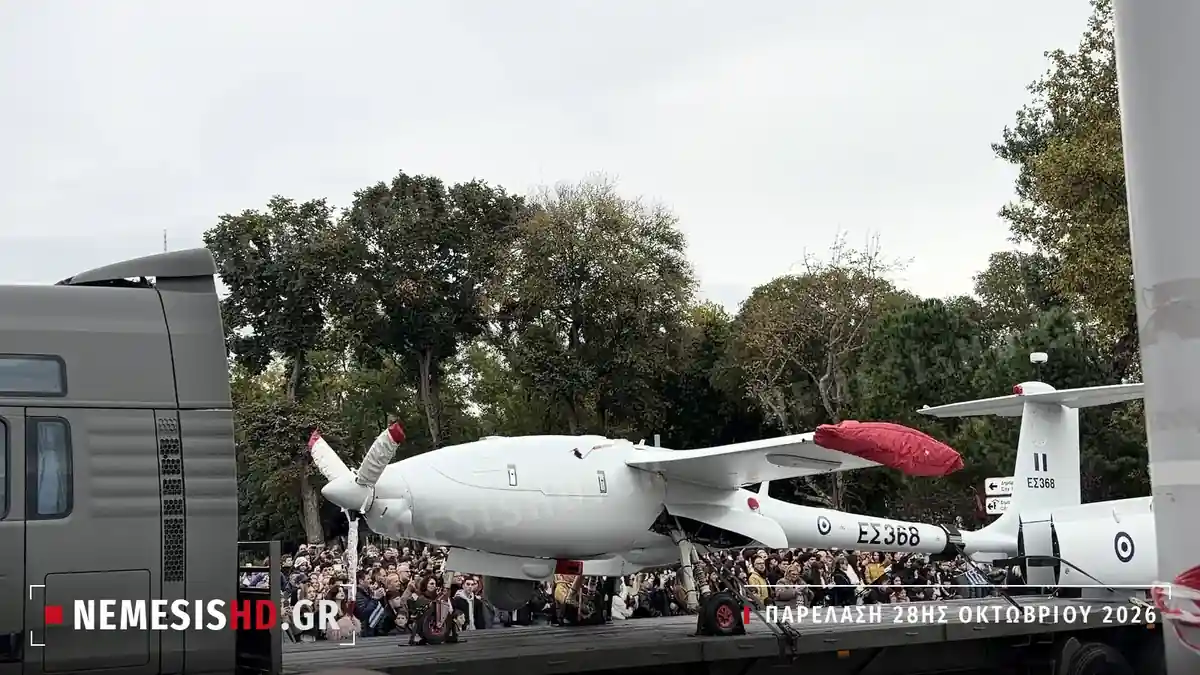
The Hellenic Army has been flying drones regularly for almost twenty years, but to look deep beyond the Evros or over the sea for a whole day it needs something bigger than a drone launched from a catapult. That is Safran’s Patroller: an unmanned aircraft with an 18-metre wingspan that takes off from a runway and stays in the air for more than 15 hours. At the military parade of October 28, 2026 in Thessaloniki the public saw the “ES368” and its sibling on a truck, with the wings removed and Army markings, among the Army’s drones and the V-BAT.
The NSPA contract and the Sperwer
The decision was taken in June 2023 at the Paris Air Show. The Army signed through the NATO Support and Procurement Agency (NSPA) for four Patrollers and ground control stations, as we reported then in Safran Patroller for Greece. The Patrollers do not replace the Sperwer, the system from the same French company (then Sagem) that the Army received in 2006, but upgrade the tactical unmanned fleet with a far more capable aircraft. The Sperwer is launched from a catapult and lands by parachute, while the Patroller takes off and lands automatically on a runway, like a normal aeroplane.
A few months before the Greek contract, in February 2023, the Patroller received airworthiness certification under NATO’s STANAG 4671 standard for unmanned aircraft. The detail has practical value: a certified aircraft can be integrated more easily into airspace shared with civil aircraft, which is critical for a country with civil air traffic as dense as Greece’s.
A glider that became a surveillance aircraft
The Patroller is based on the German Stemme S15 motor glider, which explains its wide wingspan and endurance. The long, slender wings generate lift with very little fuel, and a Rotax engine drives the propeller in the nose. Under the fuselage sits Safran’s Euroflir 410 multispectral sensor, for observation and identification at long range, day and night, with laser target designation. On the wing pylons it can carry pods with synthetic aperture radar (SAR) and ground moving target indication (GMTI), to see through clouds and detect moving vehicles, or electronic warfare and communications intelligence (COMINT) pods. It can also take external fuel tanks for even longer endurance.
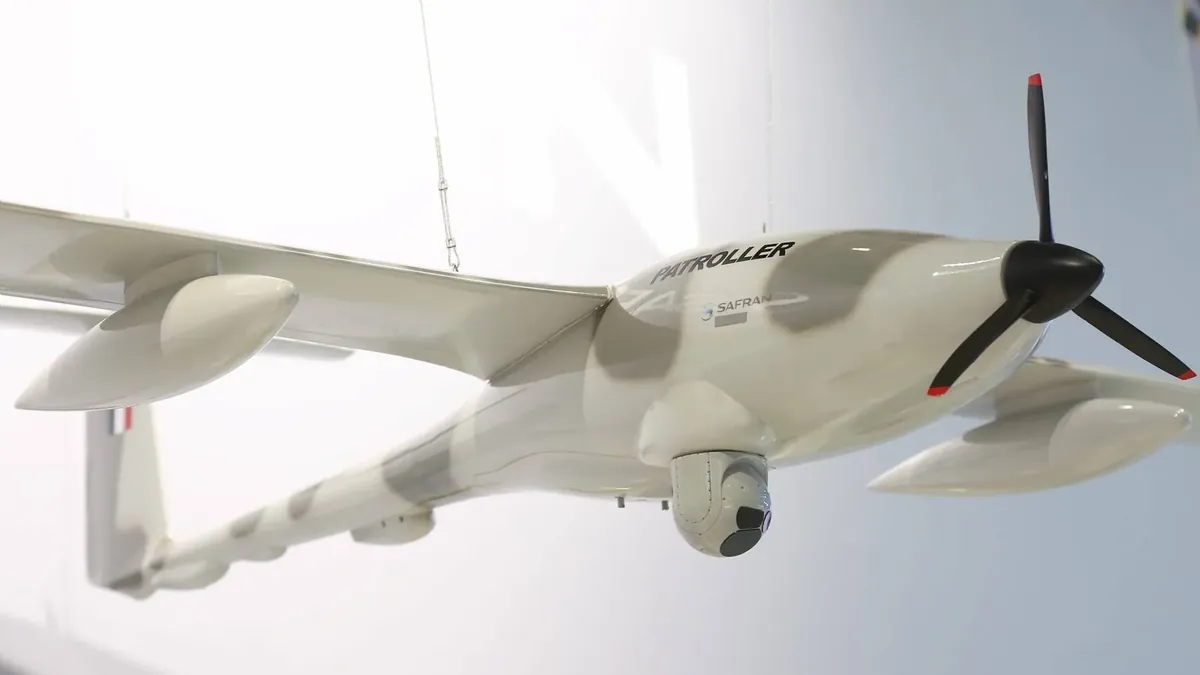
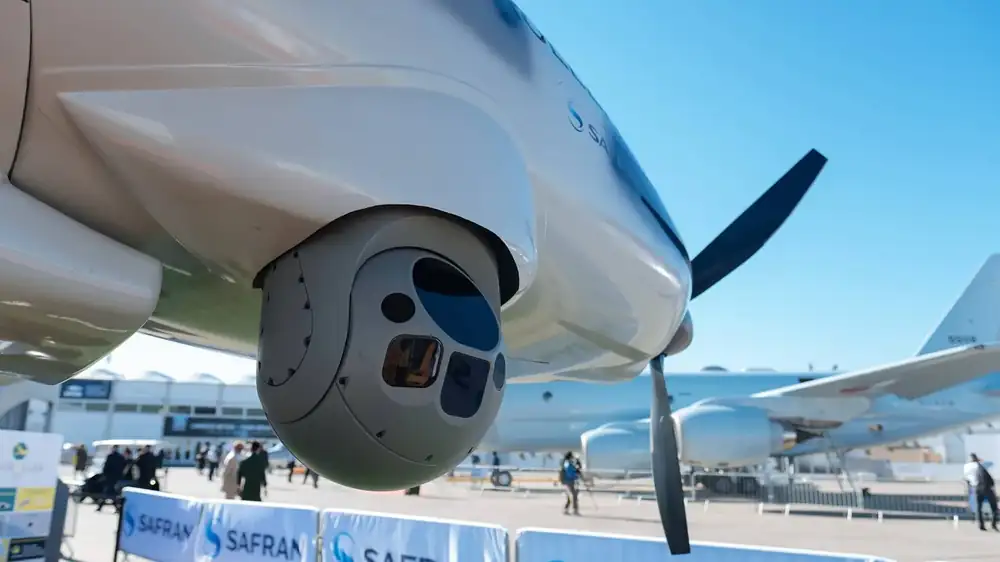
Safran has also presented an armed version, with Thales ACULEUS-LG laser-guided rockets. For Greece, however, the Patroller’s value lies mainly in surveillance. An aircraft that stays above the Evros or the coasts for a whole day, with an electro-optical sensor and radar, sends live imagery to the General Staff and to units on the ground through video terminals, and gives target data to the Artillery, which with the PULS gains a range that needs “eyes” hundreds of kilometres ahead.
Four aircraft and a big question
Four aircraft are few for continuous presence in the air, once maintenance, training and losses are counted. At the same time the Army has acquired within a few years Sperwer, Patroller, V-BAT, Orbiter, small drones and loitering munitions, from different countries and with different control stations. The problem of fleet diversity is real, and the Patroller is one of the systems that will decide whether the Army builds one unified surveillance network or a collection of separate aircraft. The appearance of the “ES368” in Thessaloniki showed that the aircraft is here. The next step is to see how much it flies and how it ties in with the rest.