Military & Defense
Ukraine: Strike on an Iskander-M launcher repair base in Kursk; overnight Russian attack with 108 drones and 5 missiles
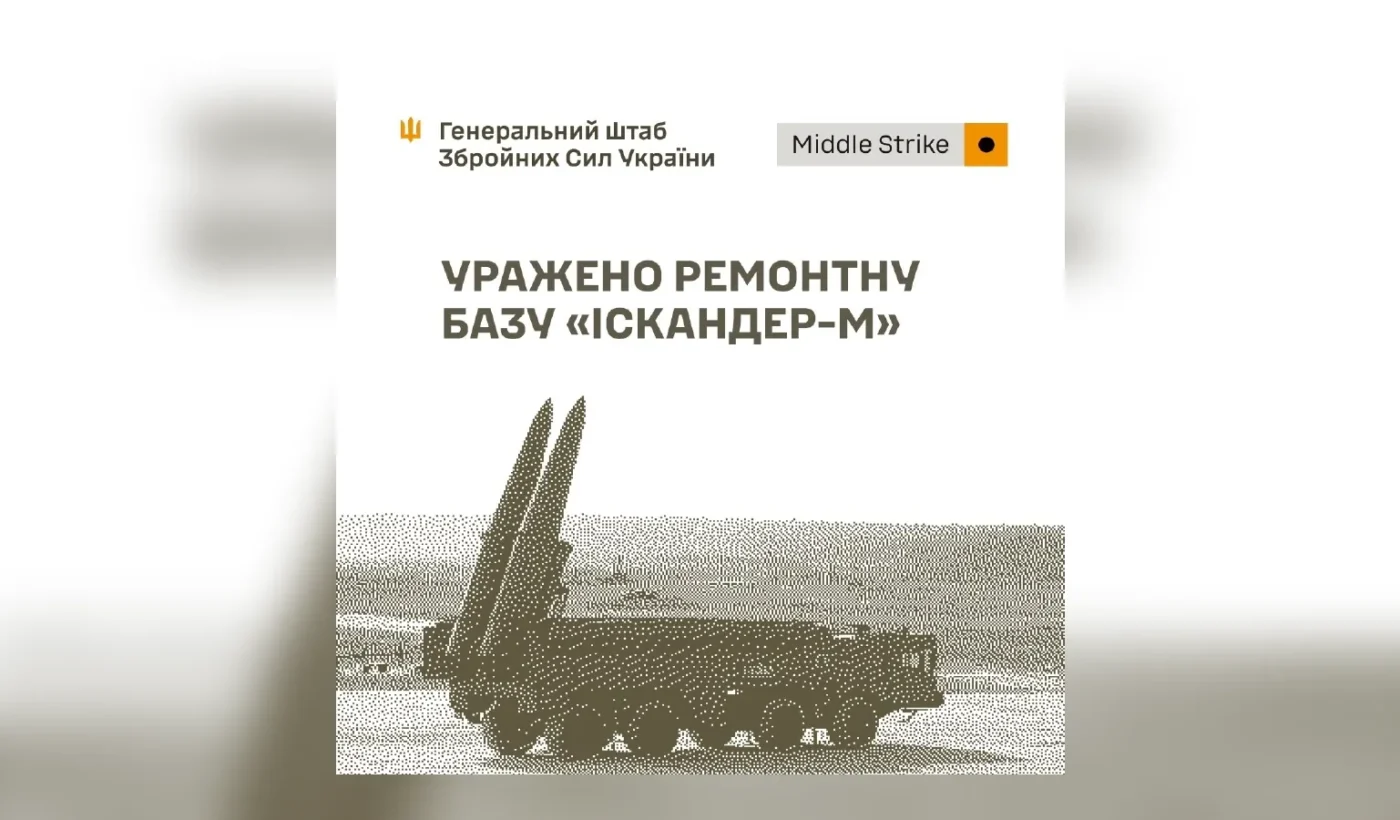
Ukrainian forces struck a repair base for Iskander-M self-propelled launchers and transporter-loaders near the village of Kondrinka in Russia’s Kursk region, Ukraine’s General Staff announced on Tuesday, October 13.

Ukrainian forces struck a repair base for Iskander-M self-propelled launchers and transporter-loader vehicles near the village of Kondrinka in Russia’s Kursk region, the General Staff of Ukraine’s Armed Forces announced on Tuesday, October 13. The same announcement reports a strike on a radar station near Skriabyne in the Bryansk region.
In occupied Luhansk, according to the General Staff, a fuel depot at Dovzhansk and an ammunition depot at Rubizhne were hit. Concentrations of personnel and equipment were also struck at Selydove, Rozdolne, Suzenka and Mirnohrad in the Donetsk region, at Naberezhne in Zaporizhzhia and at Kuzemivka in Luhansk. The General Staff notes that the results of the strikes are still being verified and that the operations aim to reduce Russia’s ability to launch attacks.
Kondrinka is in the Kursk region, which borders north-eastern Ukraine. The area is one of the main concentration zones for Russian strike assets, because from there short-range missiles reach cities such as Sumy and Kharkiv within minutes. Kyiv gave no information on the means used in the strike, nor imagery of the damage beyond the graphic of the day’s targets.
Why a hit on a repair base matters
Iskander-M launchers are among Russia’s most valuable assets for ballistic and cruise missile strikes on Ukrainian territory. A base where launchers and loader vehicles are maintained and repaired is a critical link, because every vehicle put out of action reduces the launch rate. Kyiv is pressing on production as well, with sanctions on 70 officials in the Iskander and Zircon missile industry.
The overnight attack
In a separate update, the General Staff said that overnight Russia launched 5 Iskander-M or S-400 ballistic missiles from the Bryansk region, 9 “Banderol” and “Dan-T” loitering munitions and 108 Shahed-type drones, 74 of them jet-powered, together with Gerbera and “Parodiya” decoys. The drones were launched from Oryol, Kursk, Primorsko-Akhtarsk, Donetsk and Hvardiiske in Crimea.
Air defence shot down or neutralised 88 drones, including 58 jet-powered ones. Strikes were recorded at 17 locations and falling debris at 7, while loitering munitions hit Kharkiv. The attacks continue despite the talk of an energy ceasefire between Russia and Ukraine. The jet-powered drones, which are faster and harder to intercept than classic Shaheds, made up the large majority of the overnight attack.