Opinion Greek-Turkish Relations
Opinion: Sanctions on Libya – Athens must make the Turkish–Libyan memorandum costly for Benghazi and Tripoli
After Libya’s House of Representatives approved the Turkish–Libyan memorandum, an opinion piece argues Athens must impose national measures at once and push for EU sanctions, since the legal tools already exist.

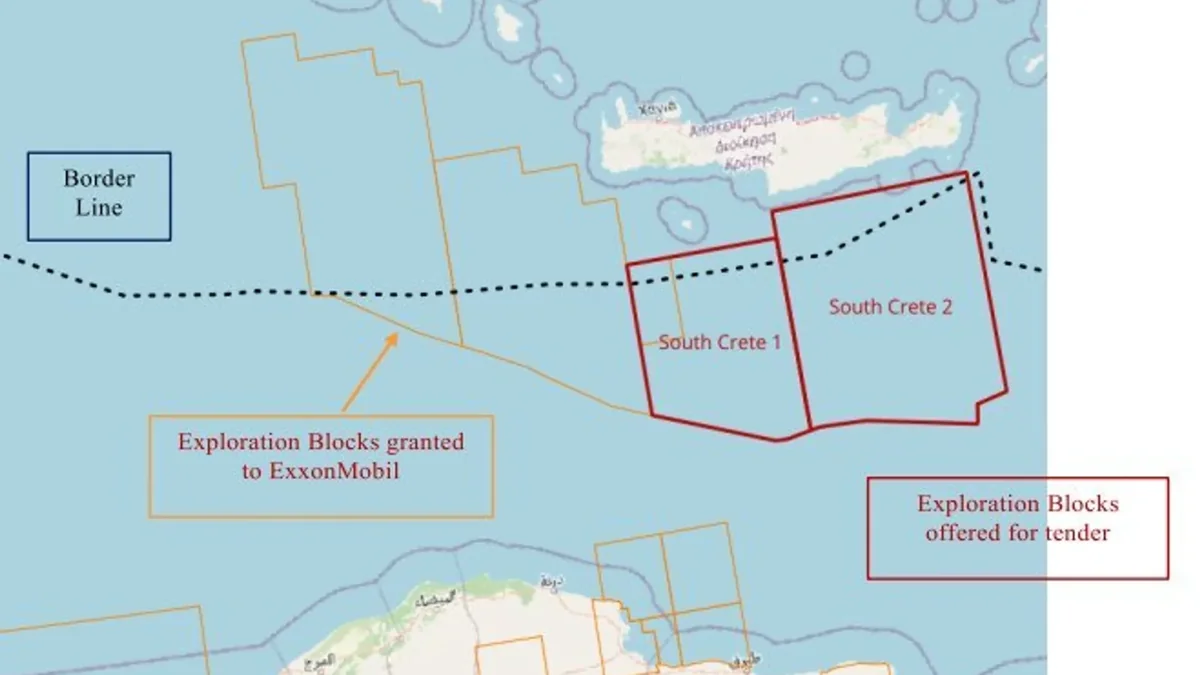
The vote of October 20 in Benghazi was not a diplomatic accident. It was a choice, and choices that turn against Crete must carry a cost. Libya’s House of Representatives unanimously approved the 2019 Turkish–Libyan memorandum, cancelled Decision No. 1 of 2020, by which it had rejected it, and cancelled Decision No. 6 of 2020, which called for severing relations with Ankara. Within hours Çağrı Erhan, Erdogan’s chief foreign policy adviser, wrote “Congratulations to our Blue Homeland”. Athens will answer, as it has every time since 2019, that the memorandum is null and void. That is legally correct and will remain so. Politically, however, eastern and western Libya learned something more dangerous: that they can move against Greek sovereign rights without paying anything at all. That must change, with national measures the government can take immediately and with European sanctions for which the legal tools already exist.
A series of hostile moves, not an isolated episode
Anyone who sees the ratification as a bolt from the blue misses the picture. On May 27, 2025 Tripoli submitted to the UN the continental shelf limits it claims south of Crete, and in June 2025 Libya’s National Oil Corporation signed a seismic survey agreement with Turkey’s TPAO. On July 6, 2025 Giorgos Gerapetritis was in Benghazi and met Field Marshal Khalifa Haftar. Two days later the same Benghazi authorities declared the European delegation of Commissioner Magnus Brunner unwelcome, which included Greek Migration Minister Thanos Plevris, together with the interior ministers of Italy and Malta. That year the Coast Guard recorded more than 18,000 migrant arrivals in Crete, against about 5,000 in 2024, with most boats departing from the coast around Tobruk, an area controlled by Haftar.
In 2026 the pressure continued. On August 24 Libya sent Athens a note verbale against the Greek invitation for seismic surveys south of Crete, the Peloponnese and in the Ionian, warning that their continuation could lead to suspension of the delimitation talks. Greek diplomatic sources called the claims groundless. On October 6 Aguila Saleh, the man who for six years kept the memorandum off the agenda, lost the speakership of the House to As-Salhin al-Ubaidi, a former head of the Libyan–Turkish friendship group. Two weeks later the memorandum was approved without a single vote against. These are successive moves with a common direction: the Blue Homeland south of Crete.
What Athens gave Benghazi and what it got
Greek policy toward eastern Libya in the past two years relied almost exclusively on the carrot. After Benghazi in July 2025, Belgasem Haftar, director general of the Libyan Reconstruction and Development Fund, was received at the Foreign Ministry on September 8, 2025 and the next day by the prime minister. Discussed were economic cooperation in construction, energy and transport, a mission of Greek businesses to Benghazi and the continuation of training of Libyan coast guard officers in Greece. In October 2025 Lieutenant General Khaled Haftar met Nikos Dendias and the Chief of the Hellenic National Defence General Staff in Athens to strengthen military cooperation. On June 15, 2026 it was the turn of Saddam Haftar, the man who today controls eastern Libya, to meet Gerapetritis in Athens.
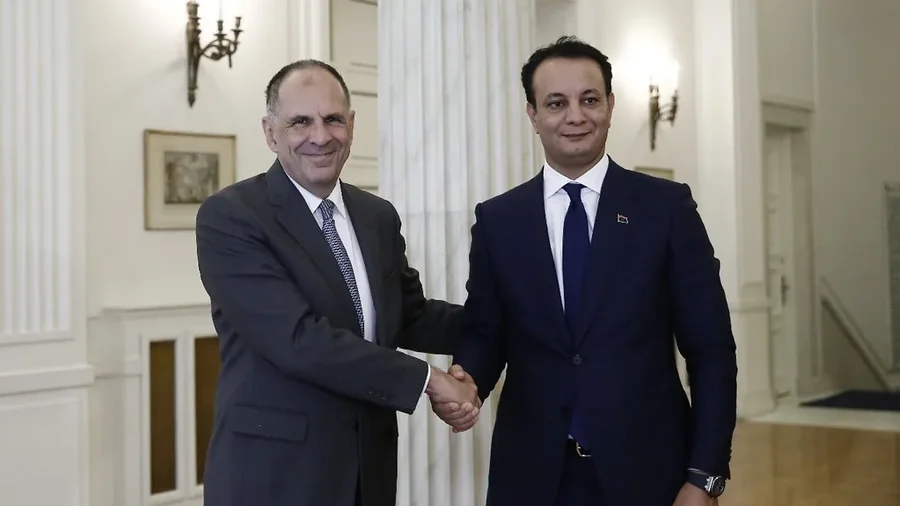
All three sons of the field marshal passed through the Greek capital on a red carpet. Benghazi got international legitimacy, the prospect of Greek investment and an open line to the General Staff. Greece got assurances that the memorandum would never come up for ratification. Those assurances lasted as long as Saleh stayed in the speakership. Experience shows that the Haftar family respects power and interest, and Ankara offered both: it reportedly threatened to resume full military support for Tripoli and to freeze Turkish investment in Benghazi. Greece, by contrast, never put on the table what Benghazi would lose if it crossed the red line.
The national measures the government can take at once
Greece needs nobody’s permission to change how it talks to Benghazi. The first step is political: freeze all high-level contacts with the Haftar family and the new leadership of the House until the decision of October 20 is revoked, and recall the Greek consul general in Benghazi for consultations. Athens has the precedent: in December 2019, a day after the Turkish Grand National Assembly ratified the memorandum, it expelled the Libyan ambassador. The second step is economic: suspend the mission of Greek businesses to Benghazi and any state support for projects of the Reconstruction Fund run by Belgasem Haftar, until Benghazi proves that Greek companies will not build ports and roads for a regime that votes to erase Crete from the map.
The third step concerns persons. The Greek Consulate General in Benghazi, operating since 2021, issues Schengen visas for eastern Libya, and Greece can refuse them to members of the House, officials and businesspeople around Haftar who organised and voted for the ratification, which for an elite that travels, shops and invests in Europe carries a very real cost. The fourth is military: suspension of the training of the Libyan coast guard and of any military cooperation with Haftar’s forces, with a clear message that cooperation on migration is an obligation of Benghazi and not a favour to Athens. And the fifth, the most substantive, is the exercise of rights: surveys south of Crete must continue normally, with the Navy present where needed. Ankara has already called Greece’s surveys “illegal” and spoken of helping Libya. Every day of delay in the Cretan blocks is a day the memorandum acquires real effect.
The European arsenal already exists
The European Union does not need to invent anything. The European Council already ruled on December 12, 2019 that the memorandum infringes the sovereign rights of third states, does not comply with the Law of the Sea and cannot produce legal consequences for third states. The Union also has a dedicated sanctions regime for Libya, Decision 2015/1333, with asset freezes and travel bans for persons who threaten the country’s peace and stability. And, most important, since November 11, 2019 it has had a sanctions regime for Turkey’s unauthorised drilling in the Eastern Mediterranean, under which two TPAO officials were listed in 2020.
Here lies the opportunity. The regime on Turkish drilling expires on November 30, 2026. With Decision 2025/2395 the Council extended it for a year, but with an empty list, and its text covers only activities not approved by the Republic of Cyprus in its own EEZ and continental shelf. Renewal must be decided unanimously within the coming weeks, so Athens holds both the time and the bargaining power. The Greek position must be clear: no simple extension, but an expansion of the regime so that it covers the maritime zones of all member states and any person or company, Turkish or Libyan, that tries to apply the memorandum in practice. In parallel, Greece can ask for a new listing criterion in the Libya regime for those who undermine member states’ sovereign rights.
The objection is familiar: Italy and other countries with energy and migration interests in Libya will not want to close doors. But unanimity works in both directions. Every European decision on Libya, from funding the Libyan coast guard to migration packages, also needs the Greek vote. Greece also has a natural ally in Cairo, which on October 15 reaffirmed with Athens its commitment to UNCLOS (see the third round of Greece–Egypt consultations), and a Greek commander in the European operation IRINI, which monitors the arms embargo off Libya. Europe will not move by itself. It will move if Athens makes it a condition.
Heavy trade and economic sanctions until the decision is revoked
Political measures send a message. Trade measures change behaviour. And here Europe holds almost the whole of Libya’s economy in its hands. According to the European Commission’s figures for 2024, the EU absorbs 75.9% of Libyan exports and supplies 62.9% of the country’s imports. European imports from Libya reached €21.1 billion, 98% of it oil and mineral products, while European exports to Libya were €7.2 billion, mainly fuels, machinery and food. Libya does not even have an Association Agreement with the EU, so there is no preferential framework that must be “broken” before measures are imposed. A country that lives on Europe’s petrodollars cannot vote to erase a European island from the map and go on selling oil to Europe as if nothing had happened.
Athens should ask the Foreign Affairs Council for a package of escalating sanctions with a clear target. In the first stage, a ban on EU exports of machinery, vehicles, construction equipment, luxury goods, dual-use products and equipment and services for the oil industry, that is, everything the Reconstruction Fund projects, Haftar’s armed forces and the oil companies need to operate and expand. Alongside, asset freezes and an EU-wide entry ban on members of the Haftar family, on the management of the Reconstruction Fund and on the members of the House who voted for the ratification, and a ban on European banks and companies contracting with the Fund. At the same stage Greece should block any request to ease the funds frozen since 2011 of the Libyan Investment Authority, which Libya has sought for years to recover.
In the second stage, if the House does not revoke the decision, restrictions on imports of Libyan crude: quotas and exclusion of cargoes from companies and terminals linked to those promoting the memorandum, and a ban on ships flying a member state’s flag from carrying those cargoes. Europe now has experience from Russian oil and knows how to design such measures without blowing up the market, while Libyan crude is easier to replace than Russian. Food and medicine stay out, as in every European sanctions regime. The aim is to hurt the coffers of Benghazi and Tripoli, not their hospitals, and that is also Athens’ strongest argument toward partners who hesitate.
At the national level, Greece can do much more than a diplomatic protest. It can ban access to Greek ports, shipyards and bunkering services to any vessel taking part in surveys or work based on the Turkish–Libyan memorandum, stop all state export insurance and state support for Greek businesses working in Libya, suspend bilateral cooperation agreements and freeze visa issuance from the Consulate General in Benghazi and the embassy in Tripoli, with exceptions only for medical and humanitarian reasons. Every measure should have a single key to lift it: revocation of the ratification and the start of real delimitation negotiations based on UNCLOS. Until then, the pressure should rise, not ease.
“We will push Benghazi to Ankara”
The main argument against sanctions is that pressure will push eastern Libya definitively into Turkey’s arms. The vote of October 20 has already answered it: Benghazi went to Ankara while Athens treated it with complete goodwill. The policy of reward without conditions has already been tried and failed. The sanctions needed are not aimed at the Libyan people. They target persons, projects, travel and revenue, and can be lifted the same day the House revokes its decision. At the same time the channel to Tripoli stays open: Dbeibah’s instruction to speed up delimitation with Greece and Malta and the Joint Committee agreed in Tripoli in April show that in Libya there are also interlocutors who can be rewarded if they act correctly.
The message that must reach Benghazi and Tripoli is simple. Greece wants a stable and united Libya, wants cooperation on migration and wants a delimitation based on the Law of the Sea. It will not fund, legitimise or train those who vote that Crete has no sea. The Turks showed Benghazi what it gains with them and what it loses without them. It is time Athens did the same.
Frequently asked questions about sanctions on Libya
What did Libya’s House approve on October 20, 2026? The House of Representatives, based in eastern Libya, unanimously approved the maritime delimitation memorandum signed by Turkey and the Tripoli government in November 2019. It also cancelled decisions No. 1 and No. 6 of 2020, by which it had rejected ratification and called for severing relations with Ankara.
Does the Turkish–Libyan memorandum acquire legal force after ratification? Not for Greece. A bilateral agreement cannot dispose of maritime zones to which a third state has rights, and under UNCLOS Crete has a full continental shelf and EEZ. The European Council judged in December 2019 that the memorandum cannot produce legal consequences for third states.
Which European sanctions regimes already exist? The Libya regime (Decision 2015/1333), with asset freezes and travel bans, and the regime for unauthorised Turkish drilling in the Eastern Mediterranean (Decision 2019/1894), which runs until November 30, 2026 with an empty list and covers only Cyprus’s zones.
Can Greece impose measures without the EU? Yes. It can freeze high-level contacts and economic and military cooperation with Benghazi, recall the consul general for consultations, refuse entry visas to persons who organised the ratification and continue the surveys south of Crete.