Opinion Greece
Opinion: Answering the Turkish-Libyan memorandum by exercising Greece’s maritime rights
Greece has lawful tools under the Law of the Sea to answer Turkish policy in practice: straight baselines, a gradual extension of territorial waters to 12 nautical miles, a contiguous zone and a fisheries protection zone, backed by a stronger Navy and Coast Guard.

The approval by Libya’s House of Representatives of the Turkish-Libyan memorandum, which Greece considers unlawful, has brought tension back to Greek-Turkish relations. Athens maintains that the agreement runs against the Law of the Sea, since it ignores the rights of the Greek islands, and that it cannot affect the sovereign rights of third states. Ankara rejects these claims: it insists the memorandum is consistent with international law and the principle of equity, and that islands cannot cut off the projection of mainland coasts or always have full effect in the delimitation of maritime zones.
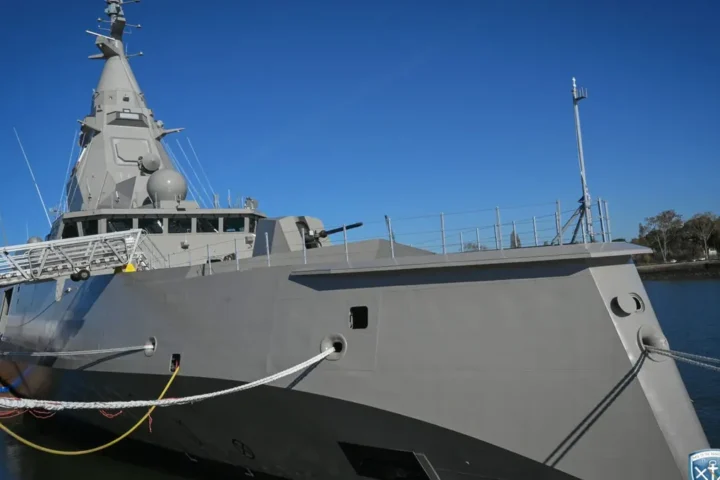
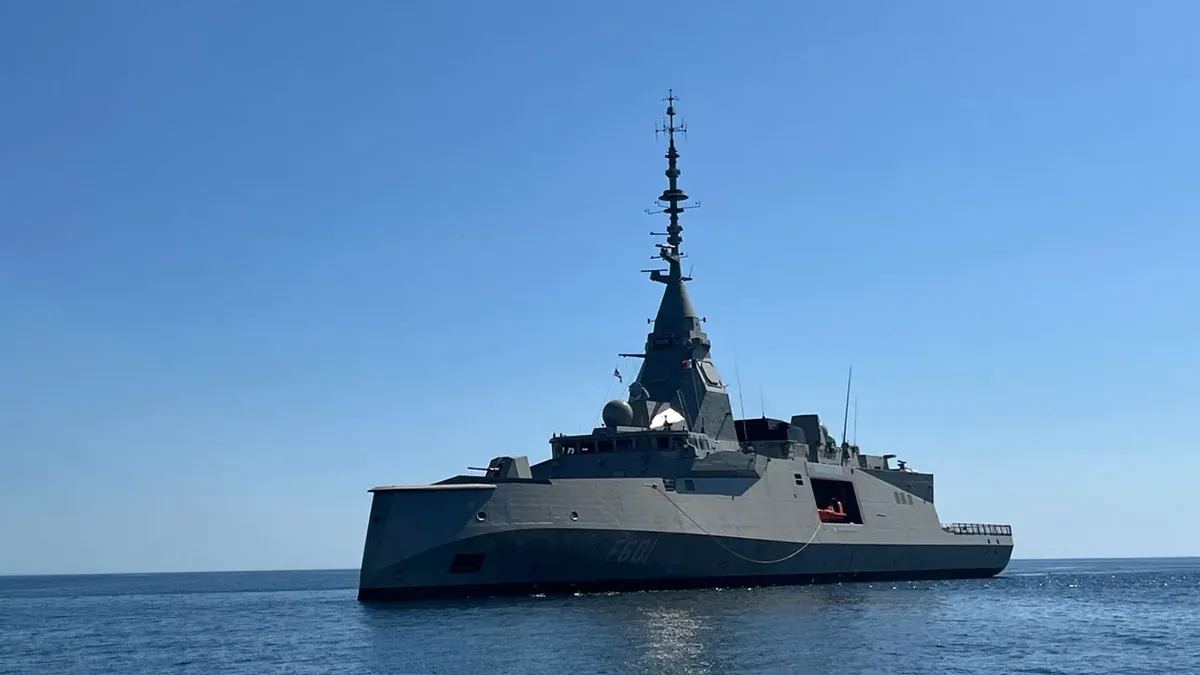
Years of economic crisis and delays in critical armament programmes left a significant part of the surface fleet ageing and technologically obsolete. Although its renewal has begun, it will take time before Greece acquires the naval power needed to back its maritime claims consistently. In 1902 US President Theodore Roosevelt wrote: “A good Navy is not a provocation to war. It is the surest guaranty of peace.” The phrase is especially relevant today. The rights that international law recognises also need determination to be exercised. For Greece, the question is how it can answer Turkish policy lawfully and actively, using every legal means at its disposal, even before it acquires the necessary naval power.
Quickly completing the big maritime delimitations is not simple. Libya’s political division makes an agreement hard to reach, while the 2020 Greece-Egypt delimitation is partial and does not settle all pending areas of the Eastern Mediterranean. In the Aegean, Greece has the right to extend its territorial waters to 12 nautical miles, but Turkey has threatened to treat such a move as a casus belli. That political cost should not lead Greece into inaction. Until the major delimitations advance and its naval power is strengthened, it can consistently exercise the remaining rights UNCLOS gives it. For the latest moves on the memorandum, see our report on Bahçeli’s statement on the Turkish-Libyan memorandum.
Increasing the territorial waters
Drawing straight baselines is a first step towards increasing the maritime area under Greek sovereignty. Normally, territorial waters are measured from the coastline, following its indentations and projections. But where the geography of the coast and the conditions of the Law of the Sea allow it, suitable coastal points can be joined by straight lines, from which measurement then begins. The starting point thus moves seaward at certain points, shifting the outer limit of the territorial waters accordingly, without changing their breadth. In other words, their extent grows without an extension to 12 nautical miles, which so irritates the neighbouring ally.
The application of straight baselines, combined with the closing of gulfs, has been estimated to be able to increase the extent of Greek territorial waters by roughly 2-3 per cent. Greece has in fact already used this possibility: in 2020 it drew straight baselines and closed gulfs in the Ionian area up to Cape Tainaron, creating a precedent for applying the method in other suitable areas too.
Gradual extension of territorial waters to 12 nautical miles
The extension of territorial waters to 12 nautical miles can continue gradually, following the Ionian precedent, where it was applied in January 2021. A next step could be the coasts of mainland Greece where it has not already been applied, and then the remaining areas outside the Aegean. That would leave the extension around the Aegean islands for the final stage, at a time Greece will choose, with its right on the matter expressly preserved.
Taking the migration card away from Turkey
The contiguous zone is a maritime zone beyond the territorial waters, which can extend up to 24 nautical miles from the baselines. It does not give Greece sovereignty, but specific powers of control to prevent and punish infringements of customs, fiscal, immigration and sanitary laws connected with its territory or territorial waters.
In practice, establishing it would give the Coast Guard an additional legal basis for targeted checks of vessels heading for Greece, before they enter the territorial waters, when there are indications of an imminent breach of immigration law. It would therefore strengthen its ability to intervene early and at a greater distance from the coast, helping to fight illegal migrant smuggling and prevent illegal entries into the country. Greece would thus acquire an additional lawful tool to limit Turkey’s instrumentalisation of migration.
Greek rules on Aegean fishing
Greece can proceed to establish a Fisheries Protection Zone, so that Turkish vessels allowed to fish in it comply with the same rules as Greek ones. Net openings, permitted gear and closed seasons would be subject to the applicable European rules. The Coast Guard could board vessels, inspect their nets and catches and, where it finds infringements, impose the prescribed penalties. This presupposes, of course, the lawful establishment of Greek fisheries jurisdiction in the area.
For Turkish fishermen, this would mean their presence in the zone is accompanied by specific obligations and real control. Those who today benefit from practices banned for Greeks would lose that advantage. If compliance with the rules reduces their catches and profit, some may choose to fish elsewhere on their own. Such a development would cut the revenue of Turkish fishing, reminding Ankara that Greece is determined to exercise in practice its sovereign rights over the Aegean’s marine resources, starting with fishing.
By exercising its rights over this marine resource today, Greece would gain experience in management, licensing and surveillance, preparing the ground for the future establishment of an EEZ. Spain offers a relevant precedent: it established a Fisheries Protection Zone in the Mediterranean in 1997 and proclaimed an EEZ in the north-western Mediterranean in 2013.
From right to practice
Greece has lawful options to answer Turkish policy in practice. Straight baselines, the gradual extension to 12 nautical miles, the contiguous zone and a fisheries zone can be successive steps of a policy that uses what the Law of the Sea provides. Strengthening the Navy and the Coast Guard must proceed in parallel, so that every decision is accompanied by the ability to enforce it.
The gradual exercise of these rights needs a plan and continuity. Otherwise the phrase “at a time Greece will choose” risks turning once again into indefinite postponement. The message to Ankara must be clear: Greece itself determines the time and manner of exercising its lawful rights. Greece must now prove it in practice, while providing the necessary military power to defend it.