Analysis
Analysis: Chios, 8 October 1996, anatomy of the Mirage 2000 and F-16D dogfight that was never closed
Analysis, 30 years on: what is known about the 8 October 1996 engagement off Chios in which a Turkish F-16D was lost. Ankara has spoken of a shoot-down by a Greek Mirage 2000 with a Magic II missile; Athens maintains it was a mechanical failure. The sequence, the aircraft, the missile and the two official accounts.

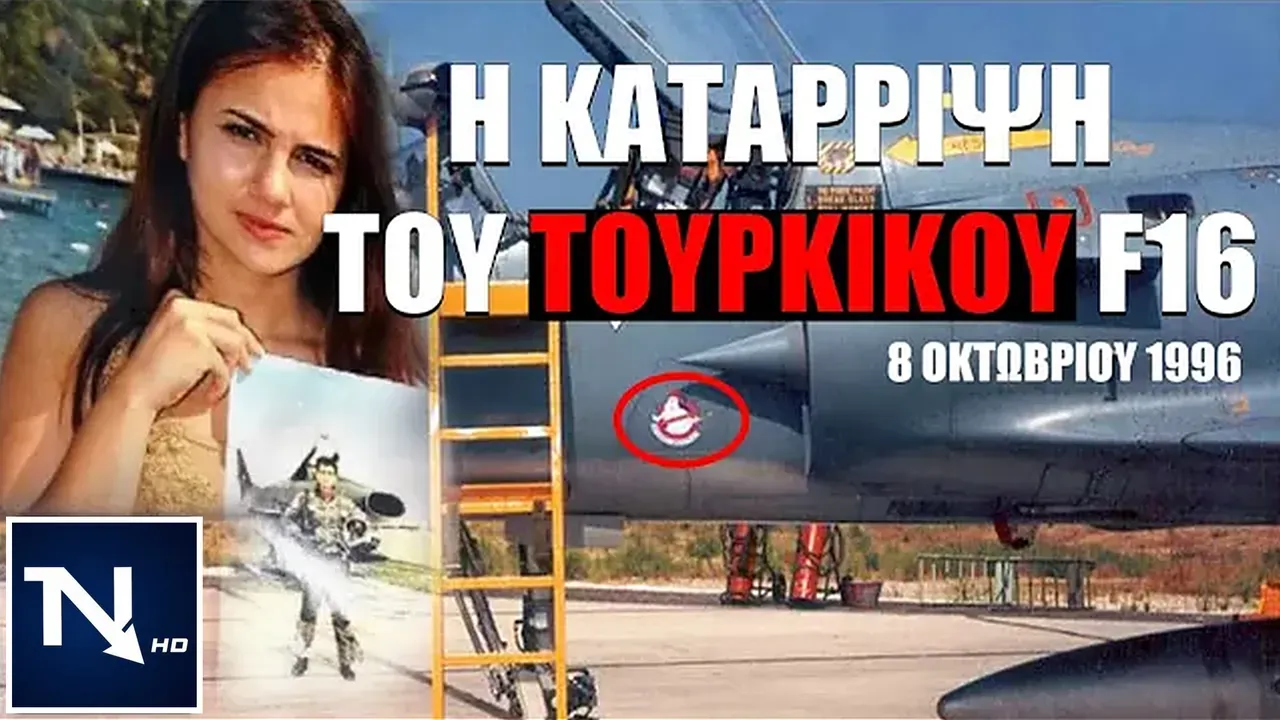
The “Chios F-16 shoot-down”, as the incident of 8 October 1996 came to be known, began as a routine interception and ended as one of the most serious air incidents in the history of Greek-Turkish relations. A Turkish F-16D Block 40 of 192 Squadron was lost in the sea, one of its two pilots was never found, and the two capitals have given different explanations ever since. Ankara speaks of a shoot-down by a Greek Mirage 2000 with a Magic II missile. Athens says it was a mechanical failure. On the 30th anniversary of the incident, 8 October 2026, we reconstruct the engagement from the available evidence and examine what the tactics and weapons of the two aircraft say about it.
In brief
- When and where: the afternoon of 8 October 1996, about 9 nautical miles from Chios, inside the Athens FIR.
- Turkish side: a formation of four F-4s and two F-16s from Balıkesir, on a mission that international sources describe as a suppression of enemy air defences (SEAD) exercise.
- Greek side: two Mirage 2000EGMs of the 114 Combat Wing from Tanagra, one of them flown by Thanos Grivas.
- Loss: the two-seat F-16D, serial 91-0023. Lt. Col. Osman Çiçekli ejected and was rescued by a Greek helicopter. Capt. Nail Erdoğan is missing.
- The dispute: Turkey, publicly since 2012, speaks of a shoot-down with an R.550 Magic II. Greece insists on a mechanical failure.
The operational environment in 1996
To understand what happened off Chios, one has to start with Imia. The crisis of 28 to 30 January 1996 brought the two countries to the brink of armed conflict and cost the lives of three Hellenic Navy officers in the crash of a helicopter. In the following months Turkish air activity in the Aegean stayed at a high level, and interceptions by the Hellenic Air Force were a daily routine.
The friction has two legal roots. The first is Greece’s national airspace of 10 nautical miles, which Turkey does not recognise beyond the 6 miles of territorial waters. The second is the Athens FIR: Greece holds that military aircraft must file a flight plan, while Turkey argues that ICAO rules apply only to civil aviation. Every Turkish flight without a flight plan is treated as an unknown track and intercepted.
An interception often turns into a mock dogfight between genuinely armed aircraft, without shared safety rules and without the altitude and distance limits that apply in training. The cost was already known before Chios. On 18 June 1992, Nikolaos Sialmas was killed when his Mirage F1CG crashed near Agios Efstratios during a low-level engagement with two Turkish F-16s. On 27 December 1995 a Turkish F-4E fell into the sea in an engagement with Greek F-16s, killing its pilot. Chios was the third fatal loss in four years, but the first and only one for which one side later spoke of the use of weapons.
The opponents: Mirage 2000EGM and F-16D Block 40
Mirage 2000EGM of the 114 Combat Wing
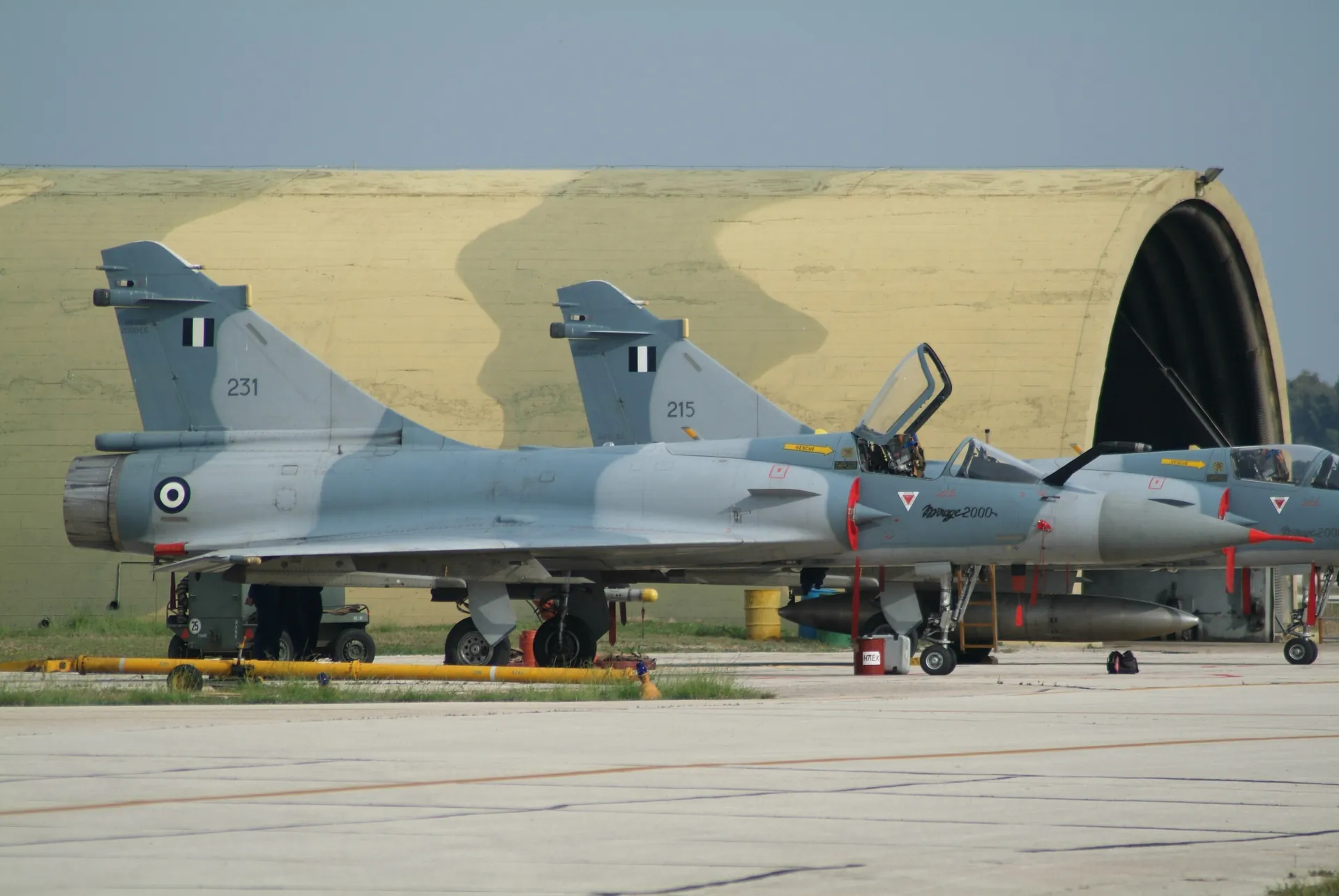
Greece received its first Mirage 2000s in 1988, in EGM (single-seat) and BGM (two-seat) versions, and based them at Tanagra, home of the 114 Combat Wing, with 331 and 332 Squadrons. They were designed primarily as interceptors. The delta wing with fly-by-wire controls gave them a very good instantaneous turn rate and ease of handling at low speeds and high angles of attack. The typical air-defence loadout included Super 530D medium-range missiles on the fuselage stations and two Magic IIs on the outer wing pylons, together with the two 30 mm DEFA cannon.
According to descriptions of the incident, the two Mirages that took off that afternoon carried almost every air-to-air missile they could. The detail matters: it indicates that after Imia, interceptions were flown in full combat configuration rather than with symbolic armament.
For the wider history of the French fighter in Greek service, see our earlier piece, Mirage 2000: The History of the deadly French Fighter Jet.
F-16D Block 40 of 192 Squadron
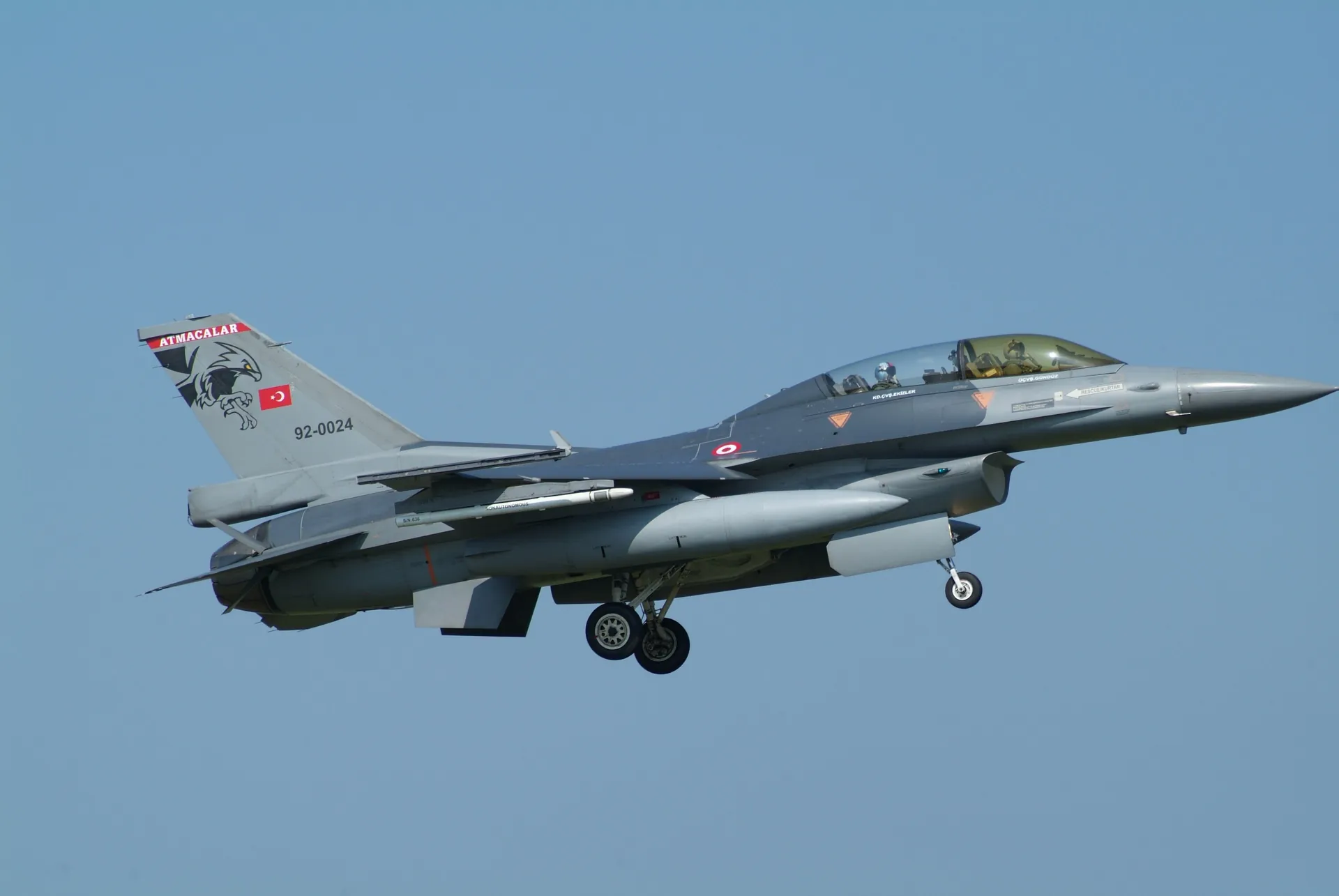
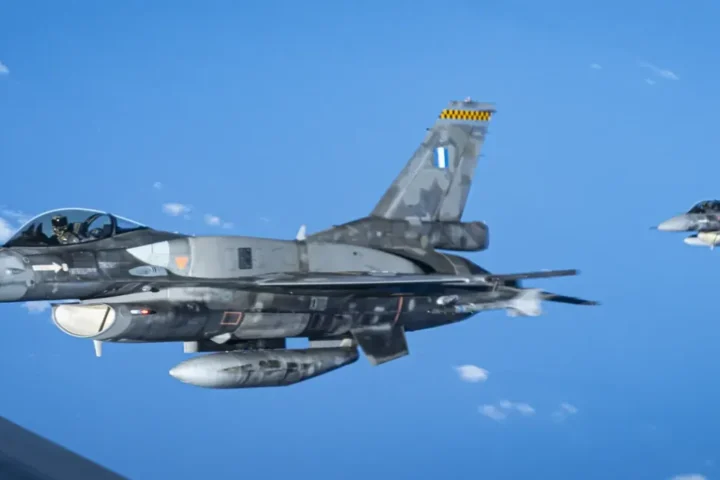
The aircraft lost was a two-seat F-16D Block 40 with serial number 91-0023, from 192 Squadron (“Kaplan”) of the 9th Main Jet Base at Balıkesir. It belonged to the F-16 generation Turkey acquired under the Peace Onyx programme, mostly assembled by Turkey’s TUSAŞ. The Block 40 is a version with a General Electric F110 engine and night strike capability, hence a multirole aircraft, and its participation in a SEAD formation alongside F-4s is consistent with that role.
The two-seater is normally used for training or for missions in which the second crew member acts as instructor or leader. The crew of 91-0023 were Capt. Nail Erdoğan and Lt. Col. Osman Çiçekli, a junior and a senior officer, which fits such a mission.
The course of the engagement
Take-off and alert
The Turkish formation took off from Balıkesir for a training flight that Ankara described as a “routine mission”, heading for the area off Chios. As soon as the aircraft entered the Athens FIR without a flight plan, Greek air defence sounded the alert. Two Mirage 2000s were ordered to scramble from Tanagra to intercept. Turkish press reports place the contact at around 14:50.
Contact west of Chios
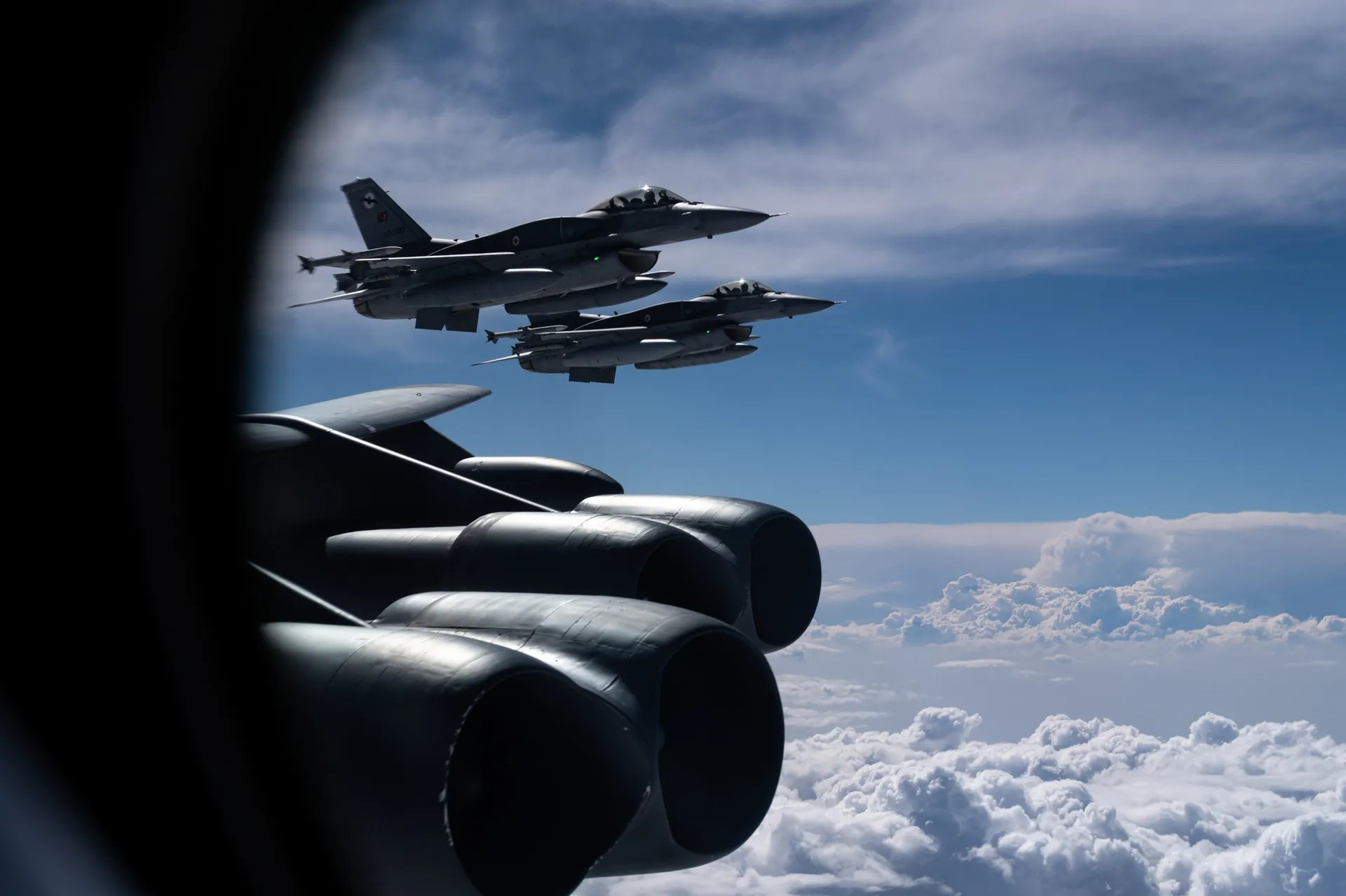
The Greek aircraft met the formation west of Chios and demanded that it leave. The Turkish pilots did not withdraw, and the two F-16s went into an engagement with the two Mirages. From then on the fight was two against two, while the F-4s, as far as can be told, stayed out of the main engagement.
According to descriptions of the incident, Çiçekli’s aim was clear: to get onto the tail of one Mirage and photograph it. In close-range air combat, the position directly behind an opponent, inside his six o’clock cone, is equivalent to a firing position for a cannon or an infrared missile. Such a photograph served as proof of a “win” and was of mainly symbolic and propaganda value.
The launch
Here only the Turkish version exists. Grivas, the pilot of the second Mirage, was following the F-16 and had already taken his own position on its tail. The F-16’s extremely aggressive manoeuvres against the first Mirage gave the impression that the Turkish pilot was about to fire. Grivas, still according to the Turkish side, moved first and launched a Magic II, which hit the rear of the F-16.
The geometry described is the classic pair-combat trap: one defender pulls the opponent into a turn and his wingman finds him from behind. The problem in an engagement outside a war is the interpretation of intent. A manoeuvre aimed at a photograph is hard to distinguish, for a pilot watching from a few hundred metres, from one aimed at a missile shot.
Ejection and rescue
Çiçekli activated his ejection seat and left the burning aircraft. Erdoğan did not make it and was lost with the F-16. The Mirage pilots reported, according to international sources, that they saw fire and a single parachute. Çiçekli was picked up by a Greek helicopter and taken to a Greek hospital. His rescue by Greek forces, a few months after Imia, is one of the less discussed aspects of the incident.
It should be stressed that many “rumours” say the Greek Mirage 2000 landed at Tanagra with one fewer Magic II air-to-air missile on its wings.
The missile: what the Magic II can and cannot do
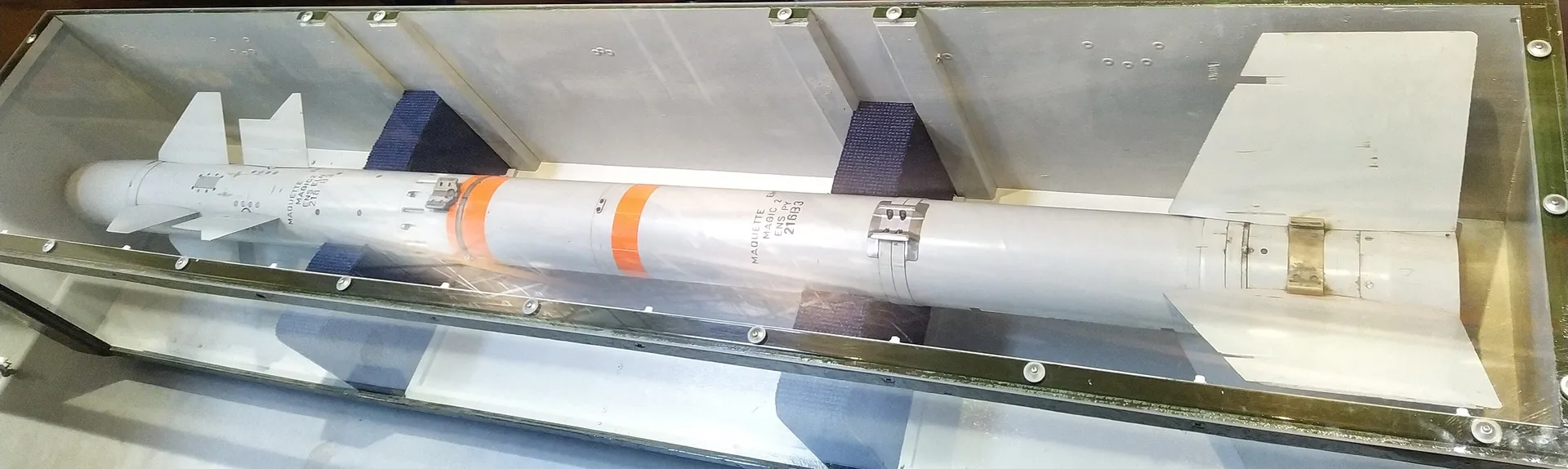
Matra’s R.550 Magic II is a short-range, infrared-guided air-to-air missile, in service since 1986 as the successor to the Magic 1. The Hellenic Air Force used it on its Mirage 2000EGMs. Its main characteristics are:
- Guidance: passive infrared, with an all-aspect AD3633 seeker.
- Maximum range: about 20 km.
- Minimum engagement distance: about 300 m (the warhead arms 1.8 seconds after launch).
- Warhead: fragmentation, about 13 kg, with contact and proximity fuzes.
- Weight / length: 89 kg / 2.72 m.
- Self-destruct: about 26 seconds after launch in the event of a miss.
Two points in this data bear directly on the incident. The infrared seeker locks onto the hottest source, which on an F-16 seen from behind is the nozzle of the F110, and the proximity fuze detonates the warhead near the target without needing a direct hit. This is consistent with the descriptions of a hit to the rear of the aircraft and of a burning airframe. The 300-metre minimum distance also shows how close, but not excessively close, the Mirage would have had to be for such a shot.
Technical consistency does not, however, prove a shoot-down. An engine suffering a catastrophic failure during violent manoeuvring can also lead to a fire in the rear fuselage. Without the wreckage and without the data from the flight recorders and from the systems of the Greek aircraft, the question cannot be closed on technical evidence.
Two official accounts
- Cause: Greece says a mechanical failure, not Greek fire. Turkey says a shoot-down by a Mirage 2000 with a Magic II.
- 1996: Greece stated its position immediately. Turkey kept a low profile, and the incident was recorded as an accident in an air combat engagement.
- 2012: no change in the Greek position. Turkish Defence Minister İsmet Yılmaz speaks publicly of a shoot-down.
- 2014: no change in the Greek position. New Turkish seabed searches and reports of legal moves against Greek officials.
The Turkish disclosure did not come by chance. In the summer of 2012 Syria shot down a Turkish RF-4E off its coast, and a public debate opened in Turkey about earlier losses that had been recorded as accidents. In that context Yılmaz confirmed that the F-16D lost off Chios had been shot down by a Greek Mirage 2000 with a Magic II. In the spring of 2014, from 13 April to 5 May, the Turkish Navy repeated the seabed search with the minehunters Amasra and Akçakoca and the rescue ship Işın, without locating either the aircraft or Erdoğan’s body.
Analysis: what Chios taught
Rules of engagement are tested in seconds. A mock dogfight between armed aircraft leaves the pilot very little time to judge whether the opponent is playing or firing. If one accepts the Turkish version, Chios is the example of the moment when the interpretation of intent became a decision to fire. If one accepts the Greek one, it is an example of how dangerous manoeuvres near the limits of the aircraft are. In both cases the conclusion for risk management is the same.
Silence as a de-escalation tool. An official acknowledgement of a shoot-down between two NATO members, a few months after Imia, would have created pressure for retaliation that no government wanted. Athens insisted on a failure and Ankara kept a low profile for 16 years. This informal sharing of silence limited the consequences of the incident.
The cycle of engagements did not stop. Ten years later, on 23 May 2006, a Greek and a Turkish F-16 collided in an engagement off Karpathos, and Hellenic Air Force Captain Kostas Iliakis was killed. Engagements have declined noticeably only in the last few years, within the framework of Greek-Turkish de-escalation and confidence-building measures, but the legal background of the dispute over the 10 miles and the FIR remains unchanged.
Timeline
- 1988: the first Mirage 2000EGM/BGM arrive at Tanagra.
- 18 June 1992: Nikolaos Sialmas killed in an engagement near Agios Efstratios.
- 27 December 1995: a Turkish F-4E crashes in an engagement with Greek F-16s.
- 28-30 January 1996: the Imia crisis.
- 8 October 1996: engagement off Chios and loss of F-16D 91-0023.
- 23 May 2006: F-16 collision off Karpathos, Kostas Iliakis killed.
- 2012: the Turkish defence minister speaks publicly of a shoot-down.
- 13 April – 5 May 2014: new Turkish seabed search, without result.
- 8 October 2026: 30 years since the incident.
Frequently asked questions
What happened off Chios on 8 October 1996?
A Turkish formation of four F-4s and two F-16s from Balıkesir entered the Athens FIR off Chios. Two Mirage 2000EGMs of the 114 Combat Wing from Tanagra intercepted it. In the engagement that followed, a two-seat F-16D Block 40 (91-0023) crashed into the sea, about 9 nautical miles from Chios.
Who were the pilots of the Turkish F-16D?
Capt. Nail Erdoğan and Lt. Col. Osman Çiçekli. Çiçekli ejected and was picked up by a Greek helicopter. Erdoğan did not eject and was never found.
Which missile is the F-16 said to have been shot down with?
According to the Turkish side, the French short-range, infrared-guided R.550 Magic II air-to-air missile, launched by the Mirage 2000 of Thanos Grivas.
Did Greece admit shooting down the F-16?
No. The official Greek position is that the F-16 fell because of a mechanical failure and not Greek fire. Turkey, after years of silence, spoke publicly of a shoot-down in 2012, through the then defence minister İsmet Yılmaz.
Was the wreckage of the F-16, or Nail Erdoğan, ever found?
No. Neither Nail Erdoğan’s body nor the aircraft has been located. The Turkish Navy repeated the searches with minehunters and a rescue ship in the spring of 2014, without result.
Was the Chios incident the only fatal one in the Aegean?
No. It was preceded by the loss of Nikolaos Sialmas’s Mirage F1CG in 1992 and of a Turkish F-4E in December 1995, and followed by the F-16 collision off Karpathos in 2006, in which Kostas Iliakis was killed. Chios stands out as the only case in which one side speaks of a shoot-down with a missile.