Greece
Pontic Greek genocide explained: history, recognition and 19 May
What the Greek Foreign Ministry says happened to the Greeks of Pontus between 1914 and 1923, who has recognised it as genocide, and why Greece and Cyprus mark 19 May.

The genocide of the Pontic Greeks is the name Greece and Cyprus give to the persecution, deportation and killing of the Greek Orthodox population of Pontus, on the Black Sea coast of Asia Minor, between 1914 and 1923. Greece’s Parliament recognised it in law in 1994 and marks it every year on 19 May; the Greek Foreign Ministry puts the number of Pontic Greek victims at about 353,000.
This explainer sets out what Greek official sources say happened, how the figures are given, who has recognised the genocide, and how it connects to the rest of the story of Greeks in the Ottoman Empire and Turkey.
Key points
- Greece’s Foreign Ministry dates the campaign against Greeks of Asia Minor and Pontus from 1913 and says it was most severe in Pontus in 1921-1923.
- The Ministry gives about 353,000 Pontic Greeks killed by 1923, roughly half of the Pontic Greek population, and argues the events meet the definition of genocide in the 1948 UN Convention.
- The Hellenic Parliament recognised the Pontic genocide in Law 2193/1994 and the Asia Minor genocide in Law 2645/1998; 19 May and 14 September are the remembrance days.
- Cyprus’s House of Representatives voted unanimously in June 2025 to designate 19 May as the official day of remembrance for the Greeks of Pontus.
- A Greek deputy foreign minister has described the neighbouring country’s non-acceptance of the historical truth as the remaining obstacle.
Who were the Pontic Greeks?
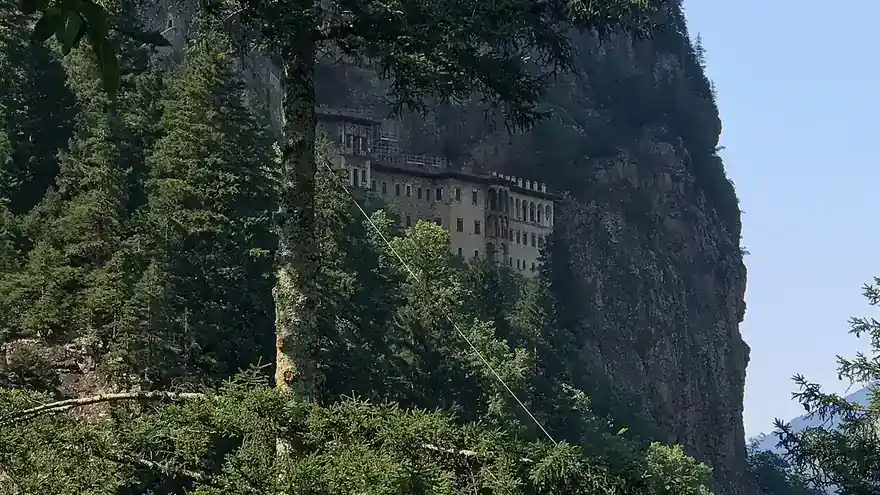
Pontus is the south-eastern coast of the Black Sea, with Trebizond (Trabzon) as its best-known city. According to the Greek Foreign Ministry, Greek presence on the Asia Minor coast and in Pontus goes back to the 9th century BC, with settlement inland from the 2nd century BC, and all Greek communities were under Ottoman rule by the middle of the 15th century.
The Ministry says that in 1914 there were about 2,500 Greek schools serving a Greek population of roughly 2.5 million in the Ottoman Empire’s Asia Minor and Pontic lands, and, citing Ottoman statistics, that Greek communities supplied about 60 per cent of the economy’s capital and labour.
What happened between 1913 and 1923
The Greek Foreign Ministry’s account runs in stages. A coup by the Committee of Union and Progress took place on 23 January 1913. By the end of 1913, the Ministry says, a plan of forced removal and mass killing began in Eastern Thrace and reached the Asia Minor coast in early 1914, producing about 650,000 Greek refugees.
After the Ottoman Empire entered the First World War on 29 October 1914, deportations moved inland and men aged 18 to 45 were sent to labour battalions. The Ministry describes the deportations in Western Pontus as especially brutal in 1915, with a wider campaign intensifying from April 1916. By the end of the war, it says, nearly 40 per cent of the Greek population had been deported and about one million people were victims.
The Ministry says persecution continued from 1919 to 1922 and was especially severe in Pontus in 1921-1923. By 1923 it counts about 353,000 dead, roughly half of Pontus’s Greek population. It adds that after September 1922 the surviving Greeks were forced to leave, and that around 100,000 Greeks and Armenians died following the Greek withdrawal from Smyrna. Our own explainer on Smyrna 1922 explained: what US diplomatic records show covers that final act through American diplomatic records.
These figures are the Greek state’s. They are given here as the Foreign Ministry’s account and are attributed to it throughout.
Why Greece calls it a genocide
The Ministry argues that the events fit the definition in the 1948 UN Genocide Convention, citing a specific plan to destroy the Pontic Greeks as such. Greece did not wait for the wider world: in February 1994 its Parliament unanimously declared 19 May a day of remembrance, an act that Deputy Foreign Minister Amanatidis, addressing a special parliamentary session on the anniversary in 2016, called a moral vindication for Pontic Hellenism, “despite the seventy-year delay”.
The Ministry’s page also explains the choice of date: 19 May is the day Mustafa Kemal landed at Samsun, which the Ministry says “marked the intensification of crimes against Pontic Greeks.”
Who has recognised it?
According to the Greek Foreign Ministry, recognition now includes the following.
- Greece: Law 2193/1994 for Pontus and Law 2645/1998 for Asia Minor; remembrance days on 19 May and 14 September.
- Cyprus: recognition in 1994, and a unanimous vote by the House of Representatives, reported by the Cyprus News Agency on 19 June 2025, to designate 19 May as the official day of remembrance and honour for the Greeks of Pontus.
- International Association of Genocide Scholars: December 2007.
- Other states, per the Ministry: Sweden (2010), Austria (2015), Armenia (2015), the Netherlands (2018 and 2021) and Australia (2021), plus a number of US state legislatures.
At federal level in the United States, House Resolution 296 of the 116th Congress, considered on 29 October 2019, refers in its preamble to “the campaign of genocide against Armenians, Greeks, Assyrians, Chaldeans, Syriacs, Arameans, Maronites, and other Christians.” Its resolving clauses commemorate the Armenian Genocide and reject efforts to “associate the United States Government with denial of the Armenian Genocide or any other genocide.” The text does not use the word Pontic,.
From Pontus to Lausanne and after
The destruction of the Greek communities of Asia Minor did not end with 1923. The Treaty of Lausanne regulated the exchange of populations and the status of the minorities that remained, as set out in Treaty of Lausanne explained: borders, islands and minorities; the promises made to the Greeks of Imvros and Tenedos are the subject of Imvros and Tenedos explained: what Turkey promised the Greeks at Lausanne. The 1955 attack on the Greek community of Istanbul is covered in Istanbul pogrom of 1955 explained: what US records show.
For the Greek state, the same line of continuity leads to Cyprus: see Cyprus 1974 timeline: coup, Turkish invasion and UN resolutions, which sets out the invasion and occupation that Turkey has maintained since 1974.
Where does Turkey stand?
The Greek position is that the historical truth has been left unacknowledged by Ankara. Deputy Foreign Minister Amanatidis, in his 2016 speech to the Hellenic Parliament, spoke of “the difficult task of ending the non-acceptance of historical truth by our neighbouring country”, which he said should be pursued by the societies themselves through direct dialogue so that such acts are not repeated. He also called for “the recognition of, and the eradication of the taboo surrounding, the Pontic genocide.”
Why it still matters
For Greece, Cyprus and the Greek diaspora, the Pontic genocide is both a commemoration and a question of recognition. Each year the Hellenic Parliament, the Cypriot House of Representatives and Greek communities abroad mark 19 May; each recognition by a foreign legislature adds to a record that the Greek state treats as settled history.
Sources
This explainer rests on the Greek Ministry of Foreign Affairs page Greeks of Minor Asia and Pontus, the Deputy Foreign Minister’s speech to the Hellenic Parliament, the Congressional Record text of H. Res. 296 and the Cyprus News Agency report on the Cypriot parliament’s vote.