Analysis Military & Defense
F-15EX Eagle II: Payload, sensors and limits of Boeing’s new fighter
The F-15EX Eagle II combines a heavy weapons load with modern radar, electronic warfare and digital flight controls. Its strengths and limits in modern air combat.

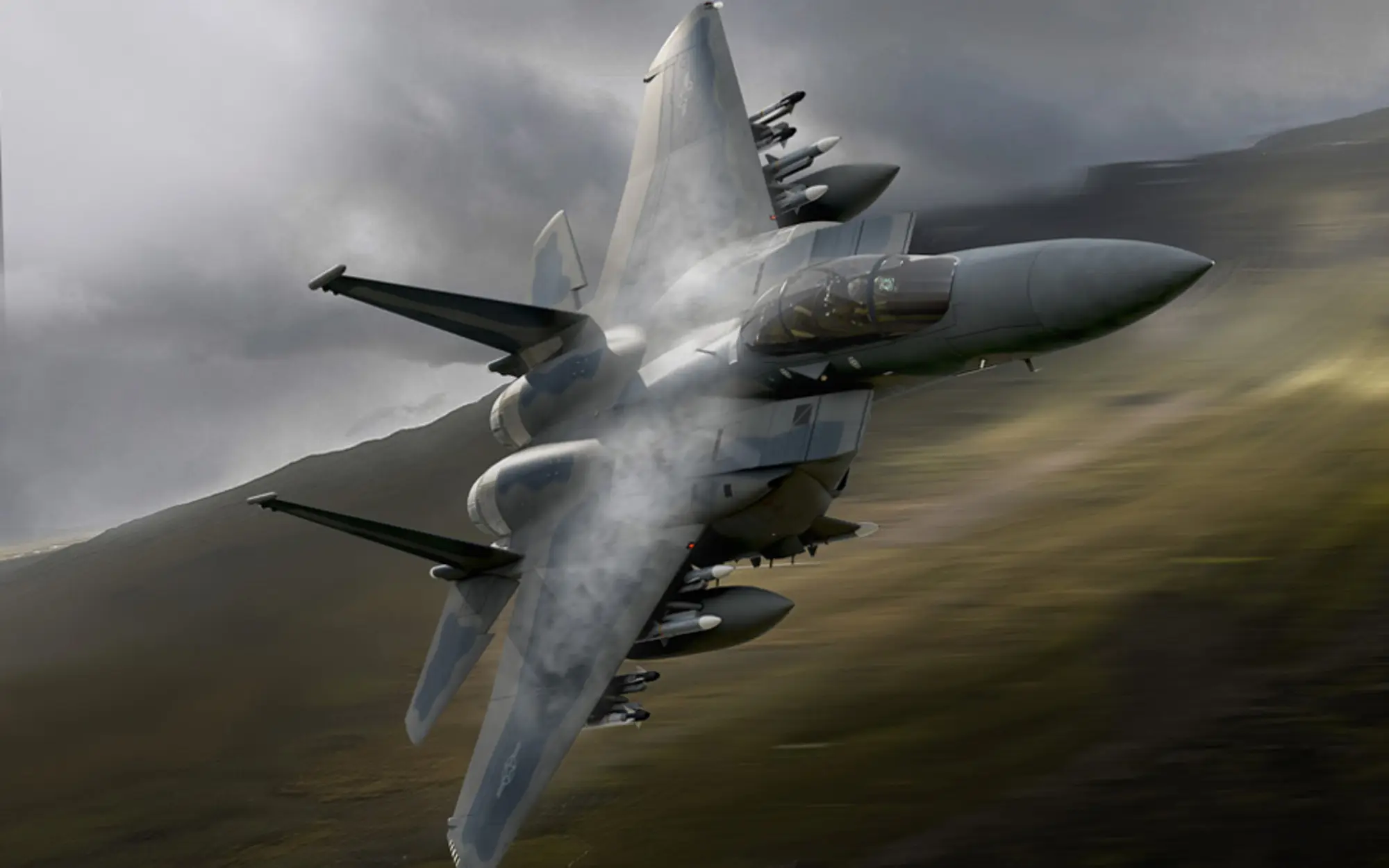
The F-15EX Eagle II extends one of the most successful U.S. fighter families into a different air-combat environment. Boeing retained the F-15’s large airframe and weapons capacity while introducing a digital cockpit, new flight controls, an AESA radar and a modern electronic-warfare suite. Its military value lies in carrying a substantial load of weapons at range and working with other aircraft. Those strengths are real, but they do not erase the vulnerability of a large, non-stealth fighter facing a dense modern air-defense network.
From the F-15 Eagle to the F-15EX
The original F-15 emerged from the U.S. Air Force’s search for an air-superiority fighter in the late 1960s and entered service in the 1970s. The family expanded from the F-15C/D air-to-air fighter to the F-15E Strike Eagle and several export variants. The F-15EX is a newly built aircraft that draws on that lineage; it is not a refurbishment of an old F-15C. The U.S. Air Force accepted its first example in March 2021 as part of a plan to replace aging F-15C/D aircraft while retaining a high-capacity fighter in its tactical fleet. The Air Combat Command described the two-seat Eagle II as operable by one pilot, with digital fly-by-wire controls and modern avionics.
This distinction also limits comparisons with older Eagles. Some F-15E aircraft are receiving the Eagle Passive/Active Warning and Survivability System (EPAWSS), and other F-15 variants have gained upgraded radars or mission computers. The F-15EX brings its systems together in a newly manufactured airframe with growth capacity and commonality with the wider family. Its design offers a way to preserve combat mass and exploit an existing support base, provided procurement and operating costs remain defensible.
Radar, electronic warfare and weapons capacity
The F-15EX combines the APG-82 active electronically scanned array radar, EPAWSS, a large digital cockpit display and a modern mission computer. The radar supports detection and targeting across a broad set of missions, while the electronic-warfare suite warns the crew of threats and provides options for response. These systems improve the crew’s tactical picture; they do not make enemy sensors or missiles irrelevant. Their effect depends on the adversary, the electromagnetic environment, weapons available and the quality of the wider formation’s intelligence and support.

The Eagle II’s clearest physical advantage is payload. Boeing specifies a 29,500-pound (approximately 13,300 kg) payload capacity and says the aircraft can accommodate up to 12 AMRAAM air-to-air missiles or a comparable mix of large weapons. This is a stated configuration capability, not a promise that every operational sortie carries that load or achieves the same range. The value of more missiles depends on targeting, rules of engagement, refueling and the ability to reach a useful launch position. Earlier claims of 16 missiles through a particular rack should not be confused with the manufacturer’s published 12-missile figure.
Its twin General Electric F110-GE-129 engines, large fuel capacity and heavy external stores give planners options for defensive counter-air, escort and strike missions. The digital fly-by-wire system and modern cockpit improve handling and crew workload compared with legacy aircraft. Link 16 and other communications permit the F-15EX to exchange information with a broader force. Yet carrying more weapons is only one part of an air campaign: surveillance, command and control, tankers and suppression of ground-based air defenses determine whether that capacity can be employed effectively.

How does it differ from an older F-15?
An F-15C pilot and an F-15EX crew share an aircraft family, but not the same cockpit or mission-system baseline. The Eagle II has two seats, although it can be flown by one pilot; digital flight controls; a wide-area display; the APG-82 AESA radar; and EPAWSS. The differences are significant for sensor management, electronic warfare and integration of new weapons. They do not imply that every earlier Eagle is identical or obsolete: upgraded F-15E and export aircraft have their own modern equipment and mission profiles.

The limits of a non-stealth fighter
The F-15EX does not have the low-observable design of an F-35 or F-22. In heavily defended airspace, a capable radar and electronic-warfare system improve awareness and survivability but cannot confer the same ability to penetrate unseen. A commander may therefore use the Eagle II alongside fifth-generation aircraft, as a high-capacity missile carrier, or from positions where the threat is more manageable. A U.S. Air Force account of the F-15EX unveiling identifies its official role as meeting fighter capacity requirements with updated technology. For how an F-35 senses and shares threats, see our analysis of the F-35 Distributed Aperture System.
Cost and force structure remain the other strategic questions. A new-build F-15EX can use experience, training and infrastructure from the Eagle family, but these advantages vary by operator and do not establish that it is always cheaper or more effective than a different fighter. The U.S. Air Force has continued testing and introducing the type, with deliveries to the Oregon Air National Guard resuming after production delays. Its ultimate contribution should be measured in available aircraft, integrated weapons and credible mission outcomes, rather than a headline payload figure.
Assessment
The F-15EX preserves the Eagle’s enduring virtues: range, payload, proven aerodynamic performance and room for new systems. Its sensors and electronic warfare make it considerably more capable than a basic legacy F-15, while its weapons capacity can give a joint force valuable mass. The aircraft is strongest when planners match those qualities to an attainable mission and account for its radar signature. In a modern air war, the decisive question is how the Eagle II fits into the force that detects, protects and directs it.
Tell us what you think in the comments. Copyright © GEOPOLITIKI. Reproduction of this article without permission is prohibited; use the sharing buttons to share the link.