Analysis Military & Defense
F-35 DAS: What its 360-degree sensors mean for the Hellenic Air Force
The F-35 DAS combines six infrared sensors for spherical warning and tracking. What the system could add to Greek air operations, and where its limits lie.

The F-35’s Distributed Aperture System (DAS) gives its pilot a continuous infrared view around the aircraft. For Greece, the military value lies less in the familiar claim of “360-degree vision” than in the time it may save when detecting a missile launch, maintaining a track or building a common picture with other forces. The sensor is one part of the F-35’s integrated mission system; its effect depends on the aircraft’s other sensors, software, communications, weapons and the way the Hellenic Air Force employs them.
What the F-35 DAS actually does
The original AN/AAQ-37 installation uses six infrared sensors distributed around the airframe. Their combined coverage feeds imagery to the pilot’s helmet and supports passive detection and tracking of aircraft and missiles by day and night. Northrop Grumman describes spherical situational awareness, missile warning and imagery that can reduce blind spots caused by the cockpit structure. Unlike an active radar, infrared sensing can observe thermal signatures without itself transmitting a radar signal, though detection range and identification depend on the target, weather, background and geometry.
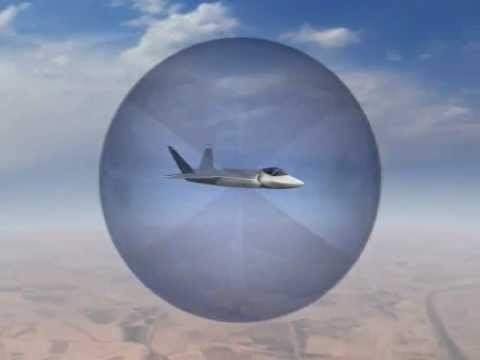
The DAS is frequently confused with the F-35’s Electro-Optical Targeting System (EOTS). They have different primary roles: the distributed cameras provide broad coverage and warning, while EOTS supports more focused air-to-air and air-to-surface targeting. The AN/APG-81 radar and electronic-warfare system add further measurements. A technical paper by F-35 mission-systems engineers explains how the fusion software associates inputs from DAS, radar, EOTS, electronic warfare and off-board links into tracks for the pilot and weapon systems. The advantage is an integrated tactical picture, not a guarantee that every detection is immediately a weapons-quality target.
Ballistic-missile tracking and the limits of the evidence
The system has also shown potential beyond fighter-versus-fighter combat. In a 2012 flight demonstration involving a test aircraft, Northrop Grumman reported that DAS detected and tracked five rockets launched in quick succession while the APG-81 radar contributed acquisition and targeting tracks. The company later reported tracking a rocket at a distance exceeding 800 miles, or approximately 1,300 kilometres, in flight tests. These were demonstration conditions; the figure should not be read as a general detection range against aircraft, cruise missiles or low-altitude targets, nor as a statement about the performance of a future Greek F-35 in the Aegean.
Operational relevance for the Hellenic Air Force
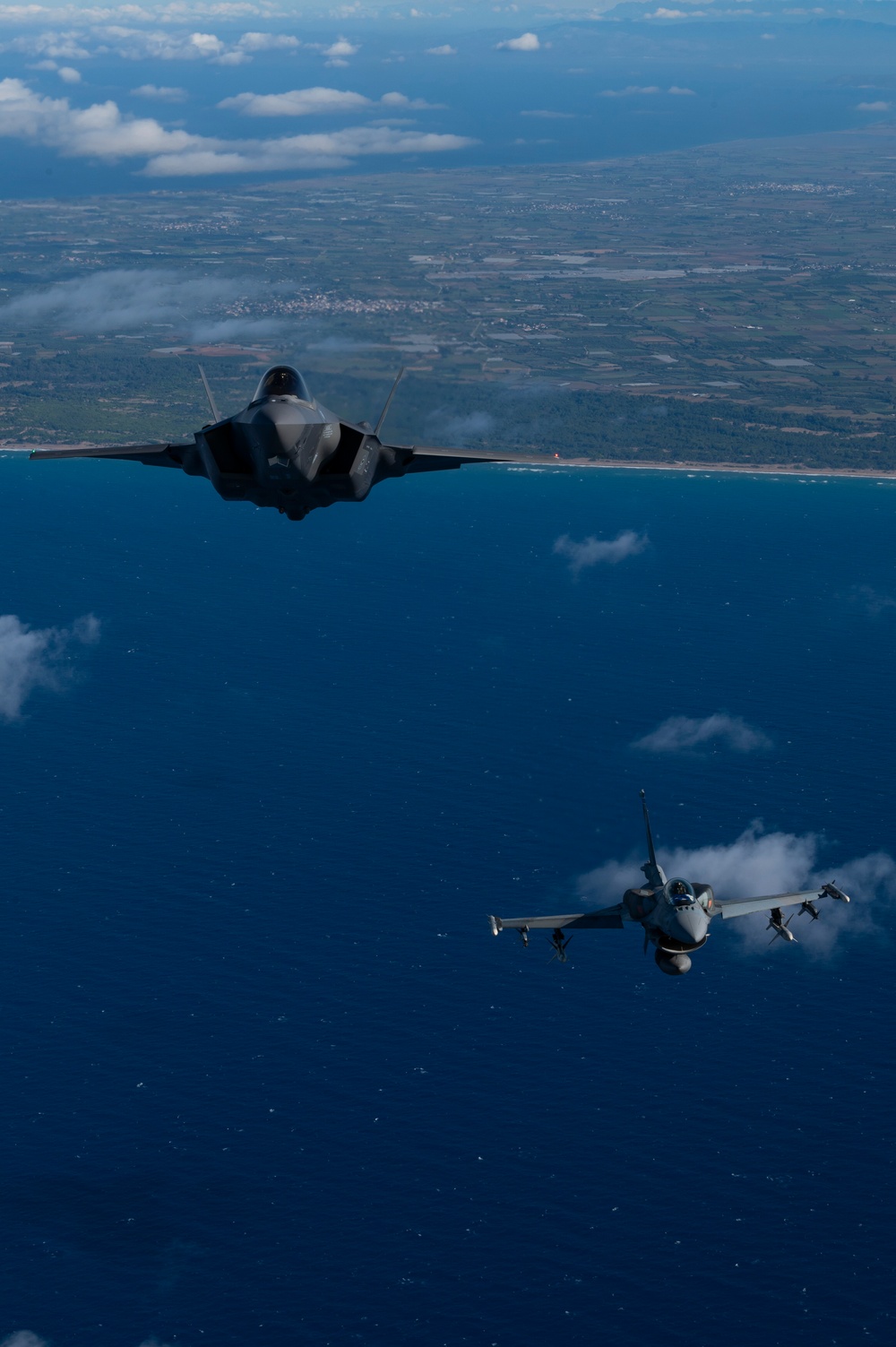
Greek planning must treat the F-35 as a future capability. The U.S. January 2024 notification authorised a possible sale of up to 40 aircraft and associated support, while the Greek defence minister said in March 2026 that the first aircraft would be delivered in the United States in 2028. Delivery for training in the United States is a different milestone from fielding an operational squadron in Greece. The aircraft has yet to enter operational Hellenic Air Force service.
In an Aegean air campaign, passive warning and persistent awareness could help crews notice threats approaching from outside the radar’s forward sector and preserve tactical options during a high-workload mission. That matters for operations over islands and sea lanes where fighters, surface-based air defences and naval units share a compressed battlespace. It does not make the aircraft invulnerable: sensor performance, electronic warfare, command decisions, missile inventories, mission planning and survivable basing still determine whether an observation becomes an effective response.
Cooperation with F-16V and Rafale aircraft is an operational question rather than an automatic property of the DAS. The F-35 can receive off-board information through Link 16 and its Multifunction Advanced Data Link, but sharing the right information across aircraft types and command networks requires compatible procedures, gateways and security arrangements. The mission-systems study describes how off-board measurements enter the fusion process; it does not establish that every Greek platform can exchange every F-35 sensor product directly. The same discipline applies to weapons planning: claims about specific future missile deliveries should rest on an announced procurement decision.

The strategic value is the whole system
The strongest case for the F-35 in Greek service is the combination of low observability, sensors, data fusion and weapons under a coherent operational concept. DAS contributes an unusually broad passive view and missile warning, while radar, EOTS and electronic-warfare equipment provide different parts of the picture. Greece’s task before operational entry is to train crews, connect the new aircraft to its air-defence and command architecture, sustain the fleet and match the platform with suitable munitions. Only then can its sensors materially expand the Hellenic Air Force’s options in a contested eastern Mediterranean environment.
Related analysis: Greek Rafale and the balance of air power.