Analysis
Analysis: Greece’s Patriot batteries, their configuration, modernisation, PAC-3 MSE and ELDYSA’s combat experience
Analysis: Greece operates six Patriot batteries, bought under a 1999 contract, and the one deployed in Saudi Arabia since 2021 has intercepted ballistic missiles and drones in 2026. What the configuration is, what has been modernised, what is still open on PAC-3 MSE, and what is official, reported or still under examination.

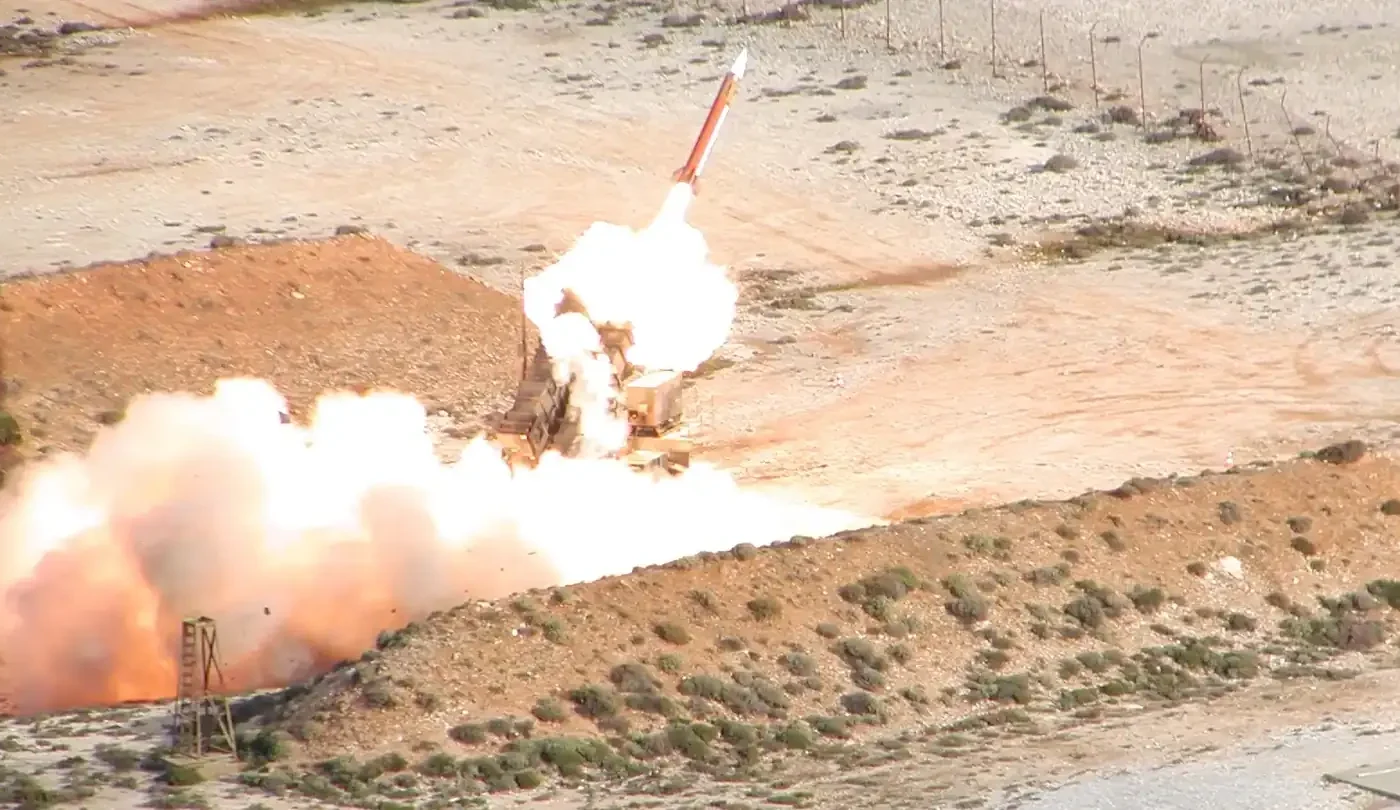
Greece has six Patriot batteries, serving in the Hellenic Air Force’s 350th Guided Missile Wing (350 PKV). They were bought under a 1999 contract and entered service in the early 2000s. They are today the only Greek system with real combat experience against ballistic missiles. Since March 2026 the battery of the Hellenic Force Saudi Arabia (ELDYSA) has intercepted Iranian ballistic missiles, as well as Houthi ballistic missiles and drones. The system also has open questions: modernisation, missile stocks and whether it will ever get the PAC-3 MSE interceptors.
This guide gathers what is known about the Greek Patriots. For each item it notes whether it is official, comes from press reports, or is still under examination.
How the Patriots came to Greece
On October 9, 1998, at the close of the Defendory exhibition in Athens, the government announced that Raytheon’s Patriot would form the core of the upgrade of Greek air defence. The competitor was the Russian S-300. The Crotale NG, the TOR-M1 and the upgrade of the HAWK were announced the same day. The value of the Patriot was then estimated at more than $1.1 billion, with final terms still being negotiated.
The contract was signed on February 19, 1999. It covered four batteries in the PAC-3 configuration, 200 PAC-2 GEM missiles, two information coordination centres (ICC) and an option for two more batteries. The option was exercised in November 1999, bringing the total to six. Figures quoted for the overall cost differ from source to source and have not been officially confirmed.
Until the new systems arrived, Greece received three PAC-2 batteries of the US Army in October 1999. These were returned later. The Greek systems began to be delivered in 2002 and the Air Force has officially had them in service since 2003. They replaced the old NIKE-Hercules.
What “PAC-3” means for the Greek Patriots
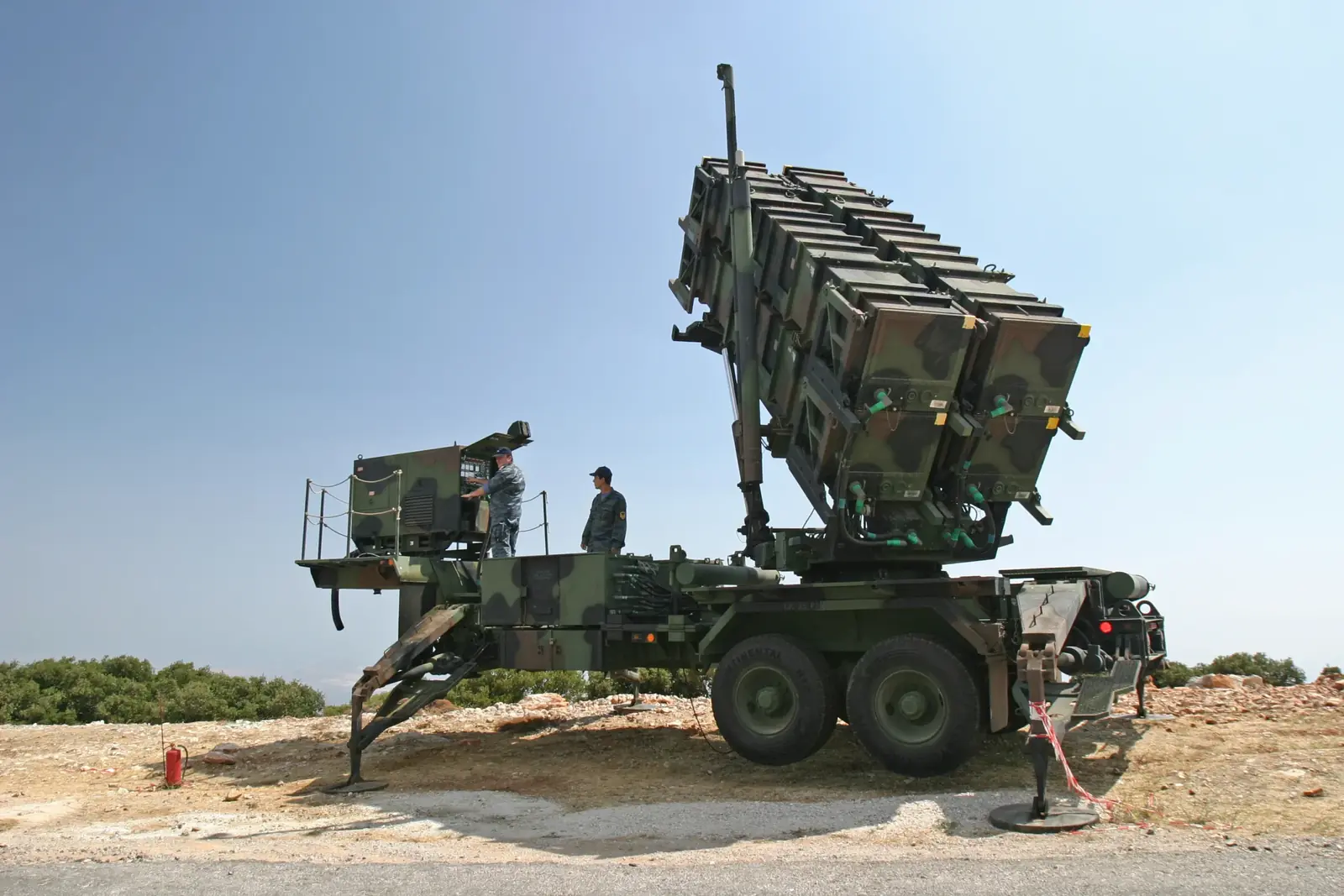
This is where the most common mistake is made. “PAC-3” in the Greek Patriots refers to the configuration of the ground system: radar, engagement control station, software and communications. It does not refer to the interceptor missiles. According to what the Air Force has made public, the Greek stock consists of missiles of the PAC-2 family:
- MIM-104A, the original anti-aircraft missile.
- MIM-104B SOJ, for engaging stand-off jammer aircraft at long range.
- MIM-104D GEM, the improved missile with a capability against tactical ballistic missiles.
Greece never bought PAC-3 CRI or PAC-3 MSE interceptors, which destroy the target by direct impact (hit-to-kill).
The 350th Wing and the six squadrons
The Patriots belong to the 350th Guided Missile Wing, based at Sedes, Thessaloniki. The Wing comes under the Air Combat Command. Each battery belongs to a Guided Missile Squadron (MKV). According to open sources, the six Patriot squadrons are the 21st, 22nd, 23rd, 24th, 25th and 26th. The Wing also has a maintenance squadron and a training squadron.
Each Greek battery has:
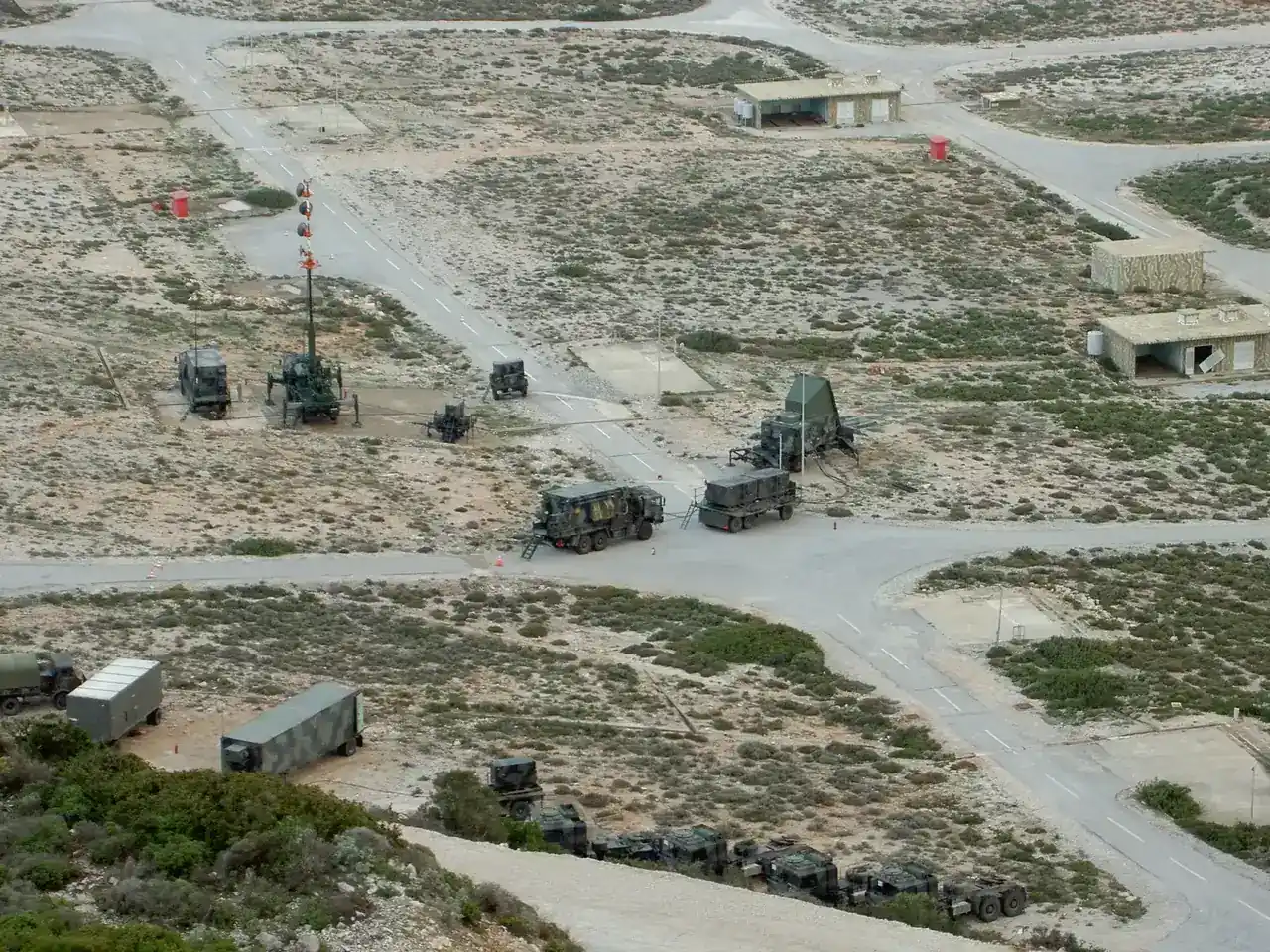
- one AN/MPQ-65 multifunction radar, with a phased-array antenna that covers a sector rather than 360 degrees,
- one engagement control station (ECS),
- up to six M901 launchers, each with four PAC-2 missiles. In total the Air Force has 36 launchers,
- power units, antennas and support vehicles.
The positions of the batteries change according to operational need. This was seen clearly in 2026, when units were moved to Karpathos and to Evros (see below).
Modernisation: what has been done and what is pending
From 2003 until today the Greek Patriots have received upgrades, mostly in software and electronics. In January 2022 Intracom Defense (IDE) signed a contract with the NATO Support and Procurement Agency (NSPA) to integrate modifications and test newer software. The contract concerned the engagement control station, the ICC coordination centre and the communications relay group (CRG) of all Greek units. Greek industry also takes part in supporting the missiles.
On August 18, 2022 the Ministry of National Defence approved Armed Forces Specification PED-A-01299, “PAC-3 guided missiles for the Patriot weapon system”. The specification describes the procurement of PAC-3 missiles for the Greek system, “upgraded to the level of PAC-3 Configuration-3+”. It asks for canisters compatible with the M903 launching station and covers two versions: the PAC-3 MSE and the PAC-3 (M91). It is a technical text that prepares a procurement. It is not, unfortunately, a contract.
Athens has reportedly discussed with Saudi Arabia having the latter finance the modernisation in exchange for the presence of ELDYSA. No signing of such an agreement has been announced to date, while the Defence Minister says negotiations are under way. The KYSEA meeting (Government Council for Foreign Affairs and Defence) of October 1, 2026 decided that the replenishment of munitions and the upgrade of the systems will be reviewed after the one-month extension of the mission. NemesisHD has also published an analysis of whether the Greek Patriots should be armed with the ACE, SkyCeptor or MSE, which examines the new options for the system.
PAC-3 MSE: where Greece stands
Lockheed Martin’s PAC-3 MSE (Missile Segment Enhancement) is the most modern interceptor of the Patriot family. It destroys the target by direct impact. Compared with the original PAC-3 it has a larger two-pulse solid-fuel motor, larger fins and upgraded actuators, which is why it reaches higher and farther. One launcher takes up to 12 MSE or a mixed load. Lockheed reports more than 2,500 MSE produced and 17 partner nations.
Three things hold for Greece, because there are misunderstandings in the defence and news press:
- There is no signed contract, nor a published US approval of a PAC-3 MSE sale to Greece.
- The intention is officially on record since 2022, through PED-A-01299, and returned to the press in 2026.
- Production is the bottleneck. The United States, Ukraine, the Gulf states and the Europeans are competing for the same missiles. Boeing, which makes the seekers, received a contract worth about $14.7 billion in October 2026 to triple production (our report). Even if Greece signed today, delivery would join a long queue.
To fire MSE, a Greek system needs an upgrade to Configuration 3+, M903 launchers or conversion kits, and software certification. That is why modernisation and the purchase of missiles go together.
ELDYSA: from the 2021 agreement to the 2026 intercepts
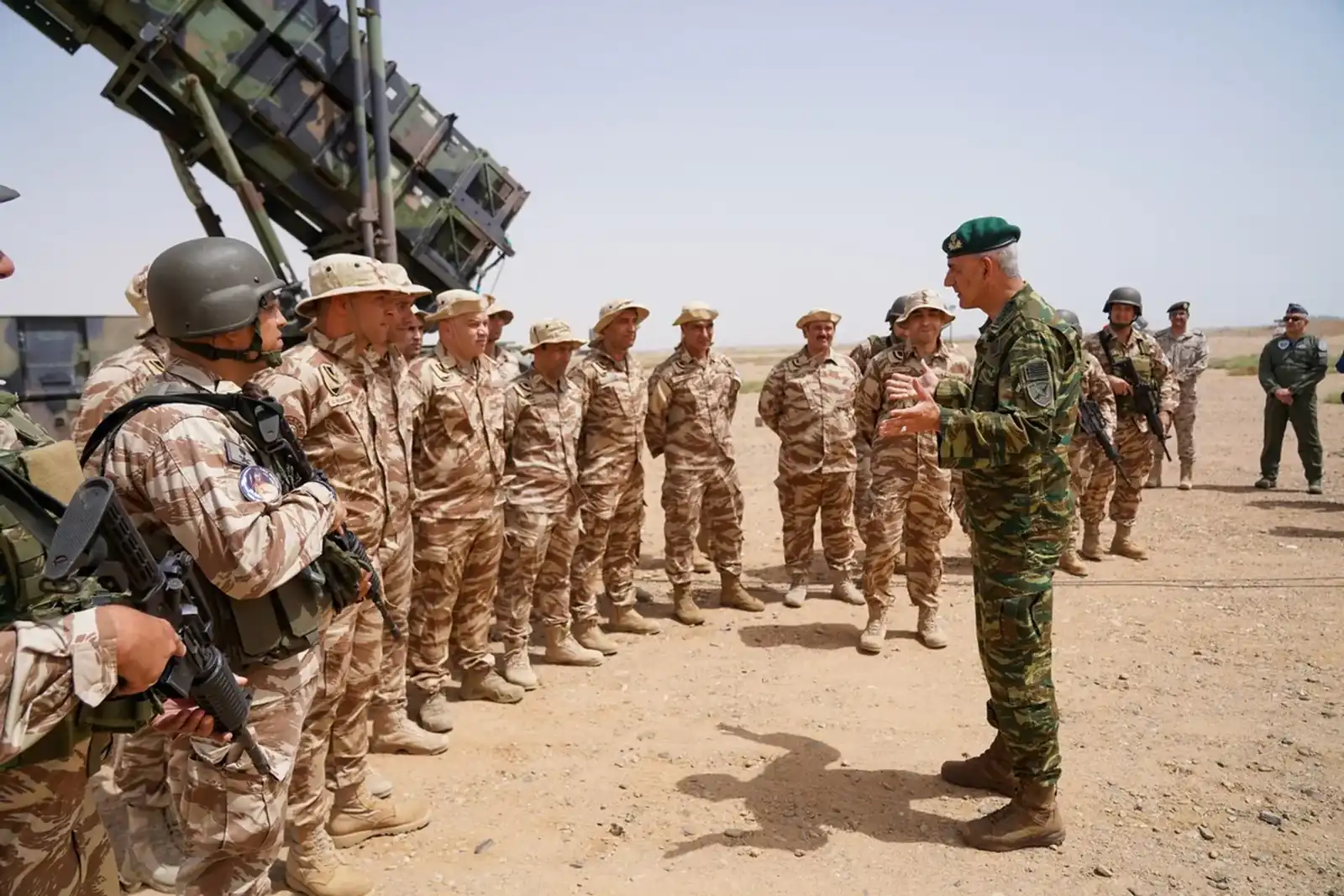
On April 20, 2021, Greece and Saudi Arabia signed an agreement in Riyadh for the transfer of a Greek Patriot battery to the Kingdom. Its mission is to protect critical energy infrastructure. The battery left in September 2021 and was set up in the Yanbu area, on the Red Sea coast. The East–West pipeline ends there, allowing oil to be exported without passing through the Strait of Hormuz. It is manned by about 120 men and women of the Air Force. The operating costs of the mission are covered by the Saudi side (although there are doubts about whether this has actually happened).
For about four and a half years the mission was a deterrent one. That changed after February 28, 2026, when the United States and Israel attacked Iran and Yanbu became a target.
ELDYSA engagements in 2026:
- March 19: two Iranian ballistic missiles aimed at refineries shot down. Two missiles were fired.
- April 6: an uncrewed aircraft destroyed.
- July 25: two ballistic missiles and one UAV from Yemen.
- August 27: engagement against UAVs with three missiles, in coordination with Saudi air defence.
- September 24: interception of a Houthi ballistic missile and UAV.
The March 19 interception was the first combat use of the Greek Patriots. Nikos Dendias said that “the Greek Patriot battery demonstrated its operational readiness and experience”. Government spokesman Pavlos Marinakis clarified that the engagement does not mean Greek participation in the conflict. The Saudi Ministry of Defence reported for that morning a UAV strike on the SAMREF refinery, about 10 km from the Greek battery, without mentioning a ballistic attack. The type of missiles used has not been officially announced in any engagement, although well-informed sources who spoke to NEMESIS HD describe successful firings with GEM. For the latest intercepts, see our reports on ELDYSA’s firings, including the KYSEA decision of October 1.
The future of the mission
The Greek–Saudi agreement had been extended until November 2026. In summer 2026 the discussion about the battery’s return reopened, after the joint defence agreement between Saudi Arabia, Turkey and Pakistan. On October 1, 2026 KYSEA approved a one-month extension. Dendias said: “We will give a one-month extension. I think the issue with Saudi Arabia will be resolved.” The outstanding issues are the replenishment of the missiles fired and the financing of the upgrade.
Whatever the outcome, ELDYSA has already left something with the Air Force: personnel who have been involved in real ballistic threats and drones, inside a multinational air-defence network. That experience will pass to the other five batteries.
Patriots in Greece in 2026: Karpathos and Evros
The Iran crisis also brought unusual movements inside the country. In early March 2026 a battery was moved to Karpathos. According to the Armed Forces, the aim was to cover possible ballistic trajectories from Iran towards Souda. At the same time it closed the geographic gap between mainland Greece and Cyprus. At the request of Bulgaria, a battery was deployed to Didymoteicho. From there it covered much of Bulgarian territory against ballistic missiles. Bulgarian Defence Minister Atanas Zapryanov confirmed the deployment on March 11, 2026.
By a KYSEA decision in May 2026 both systems returned to their bases. Ankara reacted strongly to the movements. Dendias replied: “We did not ask NATO to take the Patriots to Karpathos, so we have no reason to ask it in order to take them back.”
The idea of sending the ELDYSA battery to Cyprus instead of Saudi Arabia, if Riyadh does not meet its obligations, has been put forward as an opinion piece on NemesisHD.
The Patriots’ place in the Achilles Shield
On July 23, 2026 KYSEA approved the “Achilles Shield”, a multi-layer air-defence system worth about €3 billion. Its core is made up of the Israeli David’s Sling, Barak MX and SPYDER. The Patriots are not part of the agreement with Israel, but remain the Greek system with proven anti-ballistic capability. The question is to connect them to the new national command and control system. Otherwise they will operate as a separate island next to the new systems. With the gradual retirement of the S-300 PMU1 in view, the Patriots and David’s Sling will share the upper-tier defence.
The pressure over PAC-2 and Ukraine
On July 17, 2026, according to Kathimerini, allies from NATO and the EU asked Athens again for up to 200 PAC-2 missiles for Ukraine. This time the request concerned missiles only, not whole batteries. Greece has not given a positive answer. As long as ELDYSA consumes missiles and the MSE have not been ordered, every PAC-2 counts for Greek air defence.
Timeline
- October 1998: the Patriot is chosen over the S-300.
- February 1999: contract for four batteries.
- October 1999: three US Army PAC-2 batteries received as a temporary solution (according to press reports).
- November 1999: option exercised for two more batteries.
- 2002–2003: delivery and entry into service.
- April 2021: Greece–Saudi Arabia agreement for ELDYSA.
- September 2021: the battery leaves for Yanbu.
- January 2022: NSPA–Intracom Defense contract for software and modifications.
- August 2022: PED-A-01299 for PAC-3 missiles (MSE/M91).
- March 2026: first interceptions of ballistic missiles; deployments to Karpathos and Didymoteicho.
- May 2026: the batteries return from Karpathos and Didymoteicho.
- July 2026: approval of the Achilles Shield; pressure over PAC-2.
- October 2026: one-month extension for ELDYSA.
Frequently asked questions
How many Patriots does Greece have?
Six batteries, in the 350th Guided Missile Wing of the Hellenic Air Force. One has been in Saudi Arabia since 2021 (ELDYSA). Each battery has up to six launchers, 36 in total.
Are the Greek Patriots PAC-2 or PAC-3?
The ground system is in the PAC-3 configuration. The missiles, however, belong to the PAC-2 family (MIM-104A, B and D/GEM). It has not been announced that PAC-3 CRI or MSE interceptors were bought.
Will Greece get the PAC-3 MSE?
The intention has officially existed since 2022, with specification PED-A-01299, and returned to the press in 2026. No contract or US sale approval has been announced as of October 8, 2026.
How many targets has ELDYSA shot down?
Officially, two Iranian ballistic missiles (March 19, 2026) and one UAV (April 6, 2026) have been announced. Reports followed of interceptions of ballistic missiles and drones from Yemen in July, August and September 2026. No overall official tally has been published.
Are there Greek Patriots in Cyprus?
No. In 2026 Greece sent F-16s and frigates to Cyprus. A Patriot was deployed to Karpathos, from where it returned in May.
Who pays for the mission in Saudi Arabia?
According to press reports, Saudi Arabia covers the operating costs. The replenishment of the missiles and the financing of the upgrade are the outstanding issues, according to the KYSEA meeting of October 1, 2026.