Analysis
Analysis: KSS-III, the Korean submarine with vertical launch cells offered to Greece by Hanwha and HD Hyundai
Analysis: Hanwha Ocean has proposed four KSS-III Batch II submarines to the Hellenic Navy, built jointly in Greece with ONEX, with at least 25% Greek participation and a modernisation of the four Type 214. What the boat is, how Batch II differs from Batch I, the proposals on the table, and the open questions.

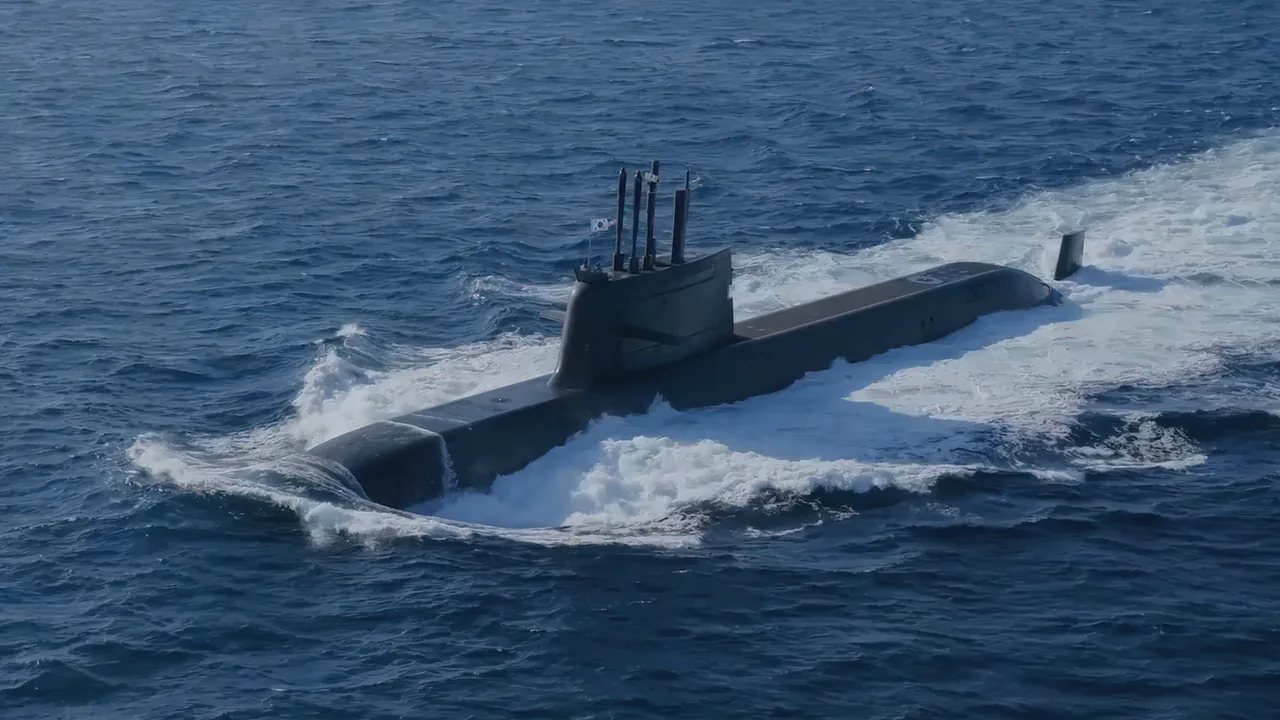
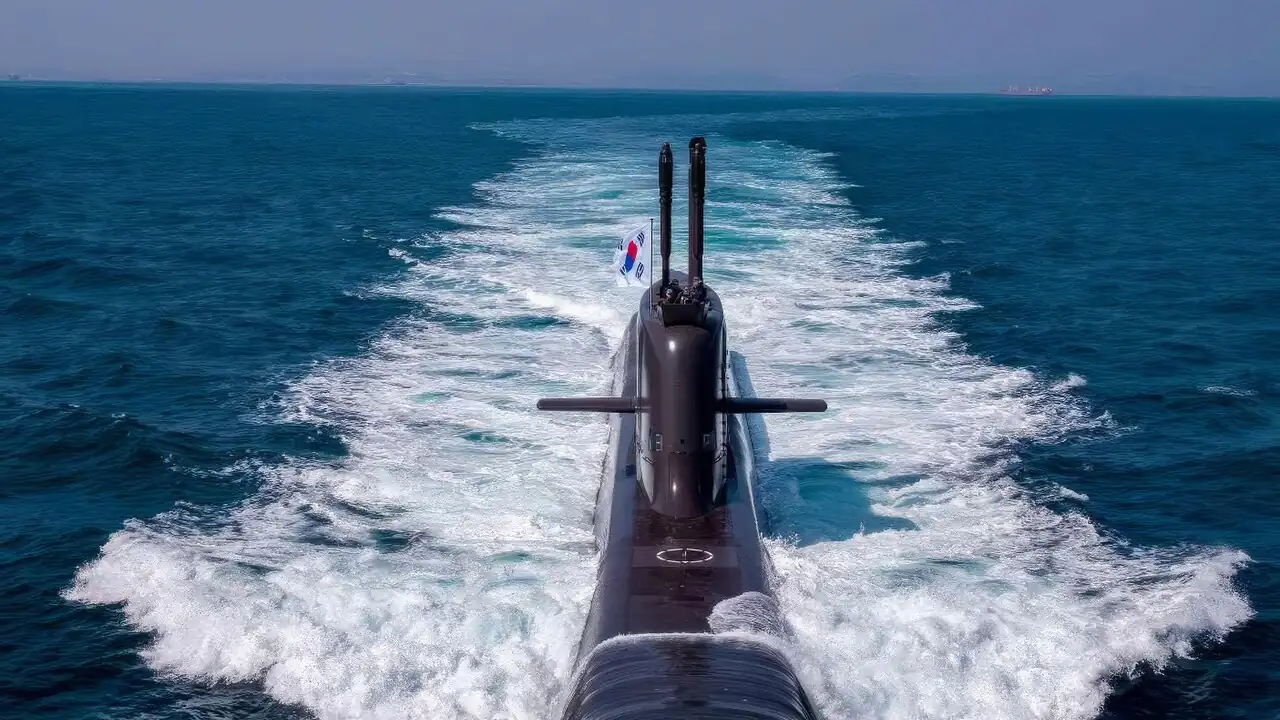
The KSS-III is the largest conventional submarine South Korea is building today and the basis of the proposal Hanwha Ocean has submitted for the Hellenic Navy’s new submarines. The company proposes four boats of the improved Batch II version, built jointly in Greece with ONEX, with Greek participation of at least 25% and a modernisation of the four Type 214. It is a boat of more than 3,000 tonnes, with vertical missile launchers, an AIP system and lithium-ion batteries.
KSS-III at a glance
- What it is: the Dosan Ahn Changho class (KSS-III Batch I, three boats in service since 2021) and its evolution, Batch II (Jang Yeong-sil class, first launched in October 2025).
- Who builds it: Hanwha Ocean (formerly DSME) and, for one Batch I boat, HD Hyundai Heavy Industries.
- What it proposes to Greece: four KSS-III Batch II, joint construction with ONEX (Elefsina, Syros), at least 25% Greek participation and an upgrade of the four Type 214.
- What is official: the Hanwha Ocean–ONEX strategic agreement (March 2026) and the meeting of the Greek Foreign Minister with Hanwha Ocean in Seoul (July 2026).
What the Dosan Ahn Changho class is
The KSS-III (Korean Submarine System III, called Jangbogo-III in Korea) is the first submarine South Korea designed on its own. It was preceded by the KSS-I (Type 209 under German licence) and the KSS-II (Type 214, nine boats, also under German licence). Korea therefore has long experience with the same German designs the Greek Navy uses.
The first boat, ROKS Dosan Ahn Changho (SS-083), was built by DSME and entered service on August 13, 2021. It was followed by Ahn Mu (SS-085) from DSME in April 2023 and Shin Chae-ho (SS-086) from HD Hyundai Heavy Industries in April 2024. DSME passed to the Hanwha group in 2023 and was renamed Hanwha Ocean.
The feature that sets the KSS-III apart from almost every other conventional submarine is its vertical launch cells (VLS) behind the sail. On September 15, 2021 the Dosan Ahn Changho fired the Hyunmoo 4-4 ballistic missile with a conventional warhead, in the presence of then President Moon Jae-in. According to South Korea’s Ministry of National Defense, the missile hit its target accurately. Korea thereby became the first country without nuclear weapons to field a submarine-launched ballistic missile.
Batch I and Batch II: what changes
Batch II keeps the basic logic of the boat, but is longer, has more cells and changes the power source. The first boat, ROKS Jang Yeong-sil (SS-087), was launched on October 22, 2025 at Hanwha Ocean’s shipyard in Geoje. According to the South Korean Navy and DAPA, it will be tested before joining the fleet in 2027. Two more boats follow, with deliveries in 2028 and 2031. All three Batch II boats are being built by Hanwha Ocean.
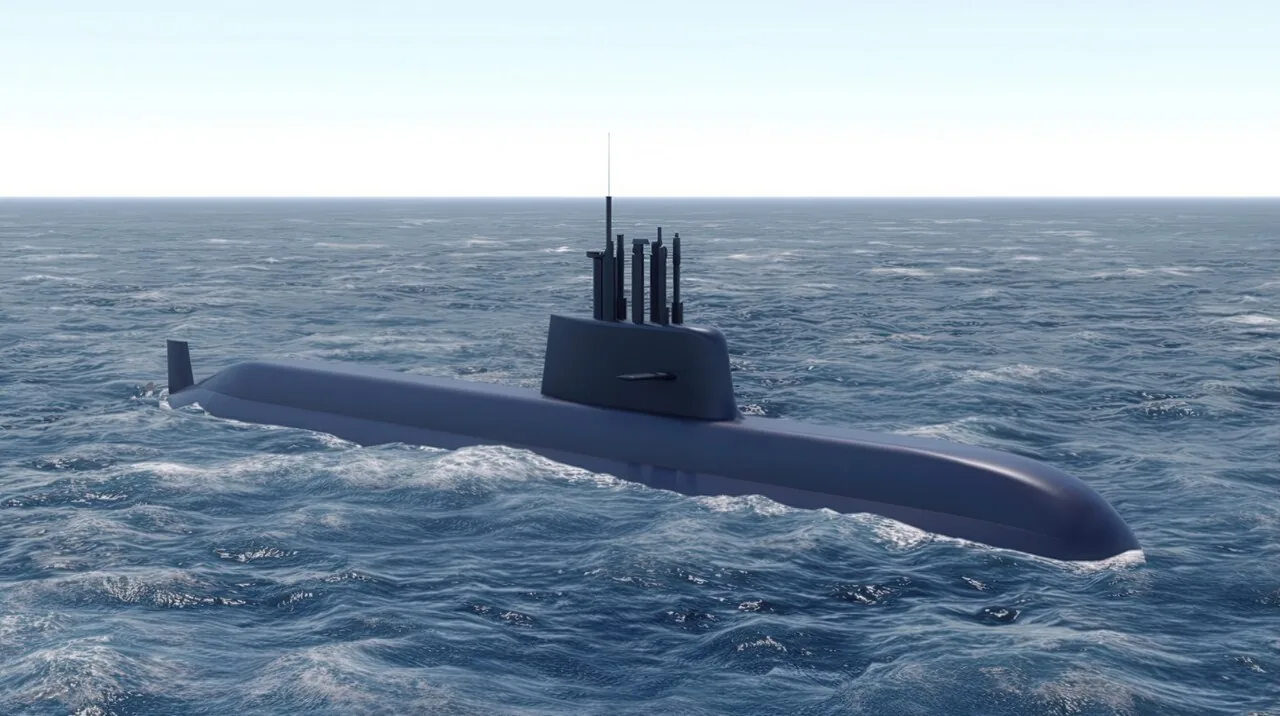
Comparison of the two batches:
- Class: Dosan Ahn Changho (Batch I) / Jang Yeong-sil (Batch II).
- Boats: 3, in service 2021–2024 / 3, deliveries 2027–2031.
- Surfaced displacement: about 3,358 t / about 3,600 t.
- Submerged displacement: about 3,750 t / about 4,000 t.
- Length: 83.5 m / about 89 m.
- Vertical launchers: 6 cells / 10 cells.
- Torpedo tubes: 6 × 533 mm / 6 × 533 mm.
- AIP: fuel cells / fuel cells, larger fuel store.
- Batteries: lead-acid / lithium-ion.
- Shipyard: DSME (2), HHI (1) / Hanwha Ocean (3).
- Crew: about 50 / about 50.
The displacement and length figures come from published data of the South Korean programme. The 3,600-tonne size for Batch II is given by the South Korean Navy and DAPA.
The biggest change is the lithium-ion batteries. Compared with lead-acid batteries, they store more energy, charge faster and last more cycles. In Batch II they work together with the fuel-cell AIP system, which lets the submarine stay submerged for days without needing a snorkel.
According to the available information, the ten cells of Batch II are intended for the Hyunmoo 4-4 ballistic missile and for the Chonryong land-attack cruise missile, which is under development. The Korean Tiger Shark torpedo and anti-ship missiles are fired from the torpedo tubes. The South Korean Navy also cites a new combat system and upgraded sonars, with more than 80% domestic components.
Export efforts: two defeats within a year
Greece is not the first country where Hanwha has offered the KSS-III. The two biggest European and North Atlantic programmes have already closed in favour of others:
- Poland: Hanwha proposed the KSS-III Batch II, the largest boat in the competition. On November 26, 2025 the Polish government chose Saab’s Swedish A26. The contract for three submarines was signed on June 29, 2026 in Gdynia. The Polish defence minister said Sweden gave the best terms on delivery time and technology cooperation.
- Canada (CPSP): Hanwha and TKMS reached the final phase. On July 6, 2026 Prime Minister Mark Carney announced TKMS with the Type 212CD as preferred supplier for up to 12 submarines. The contract has not been signed and negotiations are expected to conclude by the end of 2027. Hanwha remains a fallback option if the talks with TKMS fail.
In both cases Hanwha stressed fast delivery and a large boat. In both, European or allied industrial links weighed heavily. That matters for Greece, where France and Germany are also on the table with very strong proposals.
The proposal to Greece: what exactly has been submitted
August 2025: the South Korean government submitted to Athens a package of defence proposals (reported at the time by the Korean outlet M Economy News). The first concerned the joint construction of submarines with Hanwha Ocean and the modernisation of the Type 214. Meetings with Greek officers followed.
September–October 2025: Hanwha Ocean presented in Athens its proposal for four KSS-III Batch II. The main points:
- joint construction in Greece,
- Greek industrial participation of at least 25%, as the Ministry of National Defence requests,
- modernisation of the four Type 214 of the “Papanikolis” class in the same package.
May 2026: at the Blue Strategy Summit in Athens, Hanwha Ocean repeated the proposal and added a family of surface ships (from a 500-tonne missile boat to a 5,500-tonne frigate). It promised technology transfer, a local supply chain and support across the whole life cycle.
The Hanwha Ocean–ONEX agreement
In March 2026 Hanwha Ocean and the ONEX group signed a strategic cooperation agreement in Seoul. The agreement makes the two companies key partners for Navy and Coast Guard programmes, “including submarine programmes”, as well as for shipbuilding and maintenance. It was signed by Sung-chul Eoh, head of Hanwha Ocean’s naval ship division, and Panos Xenokostas. The Greek ambassador and the US chargé d’affaires attended the ceremony. The ONEX shipyards mentioned were Elefsina and Syros (Neorion). On April 3, 2026 ONEX presented the framework of the cooperation to the Hellenic Navy General Staff.
On July 20, 2026 Foreign Minister Giorgos Gerapetritis met Sung-chul Eoh of Hanwha Ocean in Seoul. The Foreign Ministry said the discussion concerned investments in the Greek shipping and industrial ecosystem. ONEX’s “Project Trident”, an investment plan of €1.35 billion for Elefsina and Syros, with €1 billion for production lines and submarine-building facilities, is mentioned in the same context. It is a company plan. ONEX is also asking, through the Hellenic Shipyards Association, for a binding 15-year programme of domestic shipbuilding (see our report).
The second Korean proposal: HD Hyundai Heavy Industries
Korea did not come with a single company. In October 2025 HD Hyundai Heavy Industries presented its own submarine designs in Athens. HHI has built six of the nine Korean Type 214 (KSS-II) and the Shin Chae-ho of KSS-III Batch I. The name and size of the design it proposed were not made public. In June 2026, at Posidonia, HD HHI signed a memorandum with Skaramangas Shipyards that mentions, among other things, building and maintaining submarines, if they are ordered.
The advantages for Greece
A mature boat with AIP and lithium batteries together. Batch II combines both in a boat already being built for Korea’s own Navy. Hanwha has shown pace: three Batch I in service within three years and three Batch II scheduled up to 2031.
A large weapons load. The ten VLS cells give a missile capability without reducing the torpedoes and anti-ship missiles in the tubes. Such a boat could, in theory, become a deterrence platform and not just a ship hunter.
Experience with the Type 214. Korean yards have built and maintain nine Type 214. This gives a basis to the proposal to modernise the Greek Type 214 “Papanikolis”. There is, however, already a signed agreement between TKMS and Skaramangas Shipyards (April 2026) for the same modernisation.
The questions that remain open
Weapons: which missiles could be fitted?
The proposal has not made public a weapons package. The cells of the Korean Batch II are built for Korean weapons: the Hyunmoo 4-4 ballistic missile and the Chonryong cruise missile. Exporting a ballistic missile is extremely difficult. South Korea takes part in the Missile Technology Control Regime (MTCR), which sets a strong presumption of denial for exports of missiles with a range of at least 300 km and a payload of at least 500 kg. Realistically, a Greek KSS-III would need another solution for the cells: a Korean cruise missile, if exported, or European or American weapons with new integration. For torpedoes, the Navy already uses the German SeaHake mod4 on its Type 214. Whether it would also be integrated on the KSS-III is a matter of negotiation.
Logistics from the other side of Asia
Korea is about 9,000 kilometres away in a straight line. Spare parts, training and upgrades for 30 years would depend on an industry outside NATO and the EU. Hanwha answers with a local supply chain and maintenance in Greece, through ONEX. How much of this will become a contract is the critical point; in theory, at least, there is willingness.
The Turkey factor
Turkey is building six Type 214TN (Reis class) at Gölcük and speaks openly of its own submarine plans. A Korean design would give Greece a boat different from the Turkish ones. South Korea, however, also has defence cooperation with Ankara: the Turkish T-155 Fırtına self-propelled gun is based on the Korean K9, and the Altay tank was developed with technical assistance from Hyundai Rotem. A Greek contract would therefore need clear terms on what technology will not be sold to third parties.
Where the KSS-III stands against the competitors
In the Greek programme the KSS-III sits between two European proposals. Naval Group offers the Blacksword Barracuda, of about 3,300 tonnes, with lithium batteries instead of AIP. TKMS offers the Type 212CD. Saab has presented a proposal based on the A26 Blekinge. The KSS-III is the largest and the only one with vertical launchers in service. It is also the only one from a country outside NATO and the EU. The real cost per submarine for Greece has not been published and is difficult to estimate.
For the background to the need, with the retirement of the “Triton” and the ageing Type 209, see also NemesisHD’s earlier analysis on upgrading the Type 214 and renewing the submarine fleet.
Frequently asked questions
What is the KSS-III?
It is South Korea’s programme of conventional submarines of more than 3,000 tonnes, with vertical missile launchers and AIP. Batch I (Dosan Ahn Changho class) has three boats in service since 2021. Batch II (Jang Yeong-sil class) has three boats under construction, with the first entering service in 2027.
How does the KSS-III Batch II differ from Batch I?
It is larger (about 3,600 tonnes instead of 3,358), has 10 vertical cells instead of 6 and uses lithium-ion batteries together with the AIP. It also has a new combat system and upgraded sonars.
What is Hanwha proposing to Greece?
Four KSS-III Batch II, jointly built in Greece with ONEX, with Greek participation of at least 25% and a modernisation of the four Type 214.
Has Greece decided to buy KSS-III?
No. As of October 8, 2026 there is no decision and no contract for new submarines. Korea is among the options alongside France and Germany, with no final decisions yet.
Would a Greek KSS-III carry ballistic missiles?
The Korean Hyunmoo 4-4 is a Korean national weapon and the export of ballistic missiles is strictly limited by the MTCR. The armament of a Greek boat would be decided in negotiation.
In which other countries has the KSS-III been proposed?
In Poland, which chose the Swedish A26 (contract June 2026), and in Canada, which chose TKMS as preferred supplier (July 2026), with Hanwha as a fallback option.