

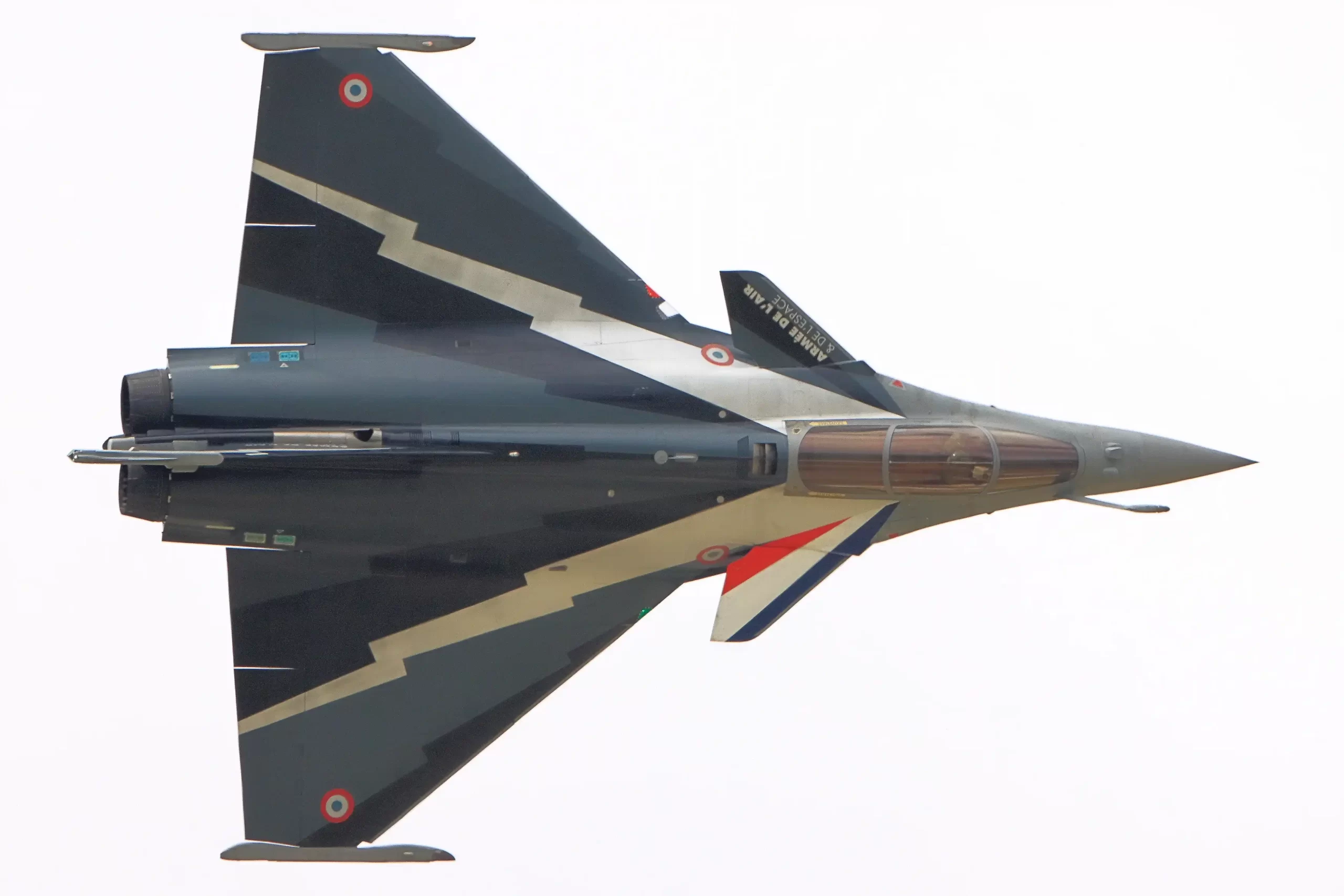
The Dassault Rafale, a cornerstone of modern military aviation, has undergone significant advancements over the years. The current Rafale F3R variant marks a substantial milestone in its development, offering enhanced electronic and weapon systems. However, Dassault Aviation is not going to abandon further development of the Rafale, as it has already initiated the development of the Rafale F4 and F5 versions, promising to elevate the aircraft’s capabilities to new heights.
The Present with Rafale F3R
The Rafale F3R represents a significant leap in the evolution of the aircraft. Introduced as an advanced version of its predecessors, the F3R variant brought substantial improvements in electronic systems, weaponry, and overall performance. Key enhancements included the integration of the long-range Meteor air-to-air missile and the Thales RBE2 AESA radar, providing great air-to-air combat capabilities. Additionally, the F3R’s enhanced electronic warfare systems and the SPECTRA defensive suite ensured superior survivability in hostile environments.

Advancing to the Rafale F4
The Dassault Rafale F4 is a significant upgrade in the Rafale fighter series, marking a crucial step in the evolution of this multi-role aircraft. The F4 upgrade is divided into two phases: F4.1 and F4.2, each bringing distinct improvements. The F4.1 level, a pivotal upgrade, signifies a major advancement in capabilities. Certified in March 2023 by France’s DGA defense procurement agency, this upgrade includes advanced equipment and weaponry, enhancing operational effectiveness. Notable additions are the new infrared search and track system (IRST) for Front Sector Optronics and enhancements to the RBE2 AESA radar, improving all-weather, long-range detection and ground target tracking. These improvements are complemented by advancements in network-centric warfare capabilities.
The Rafale F4.2, scheduled for final qualification in 2025, represents further progress, building on the capabilities introduced in the F4.1 standard. It is expected to extend the Rafale’s munitions capabilities, including the ability to carry new and advanced weapons. The integration of new radio and satellite communications will further enhance the aircraft’s communication systems. These improvements, along with ongoing enhancements in electronic warfare, cyber protection, and training simulations, ensure that the Rafale remains a capable multi-role fighter.
Transitioning to 5th Generation with Rafale F5
The Rafale F5, expected to be operational around 2035, represents a transformative upgrade, pushing it towards the capabilities of 5th and, some argue, 6th generation aircraft. This upgrade is set to include the integration of advanced technologies such as the supersonic nuclear missile ASN4G, that is replacing thw ASMP/-A and new cruise and anti-ship missiles from the Franco-British FC/ASW program. A key aspect of the F5 upgrade is its focus on collaboration capabilities with unmanned aircraft, aligning closely with the emerging concept of 6th generation fighters that emphasize network-centric warfare, advanced stealth, and unmanned systems.

Conclusion
In summary, the evolution of the Dassault Rafale from the F3R to the forthcoming F5 model encapsulates a journey of technological mastery and strategic foresight. Each iteration of the Rafale not only cements its status as a potent fighter jet in modern aerial warfare but also showcases Dassault Aviation’s relentless pursuit of delivering reliable planes. As the Rafale transitions through these upgrades, it not only adapts to the ever-changing landscape of military needs but also sets new standards for what modern fighter jets can achieve.
The Rafale’s journey is more than just an upgrade of machinery; it’s a reflection of the evolving nature of aerial warfare, where versatility, advanced technology, and network-centric operations become crucial for air superiority. The Rafale, with its continuous development, is set to remain at the forefront of military aviation, demonstrating the remarkable capabilities of current and future generations of fighter aircraft.