Analysis News
Greek Rafale and Meteor: Why Turkey’s F-16s face a harder air battle
Greek Rafale fighters and Meteor missiles complicate Turkish F-16 operations in the Aegean. The real advantage depends on sensors, training, stocks and support.

The arrival of 24 Rafale fighters equipped for the Meteor beyond-visual-range missile changed the Hellenic Air Force’s air-combat options. Greece gained a modern sensor, electronic-warfare and weapons combination that Turkish F-16 crews must take into account in any Aegean contingency. That advantage is serious; its military significance is best assessed through detection, missile employment, training and force support, rather than by declaring the opposing fleet obsolete.
Rafale, Meteor and the first engagement
Dassault Aviation states that the Rafale’s RBE2 AESA radar is compatible with the long-range Meteor air-to-air missile. Its sensor suite also includes front-sector optronics and the SPECTRA electronic-warfare system. These systems can help a crew build a track, judge a threat and choose when to engage. They do not operate in isolation: airborne early warning, ground radar, other fighters, datalinks and the quality of the tactical picture can influence which side detects and fires first.
MBDA describes Meteor’s ramjet propulsion as sustaining thrust toward the target, enlarging its effective no-escape zone compared with conventional medium-range air-to-air missiles. The decisive measure is not a single advertised maximum range. Altitude, launch speed, target manoeuvre, electronic countermeasures and guidance updates shape the probability of a hit. A long-range weapon creates a more difficult defensive problem for an opponent, but no public specification can guarantee the result of a particular encounter.
Why the Greek acquisition matters
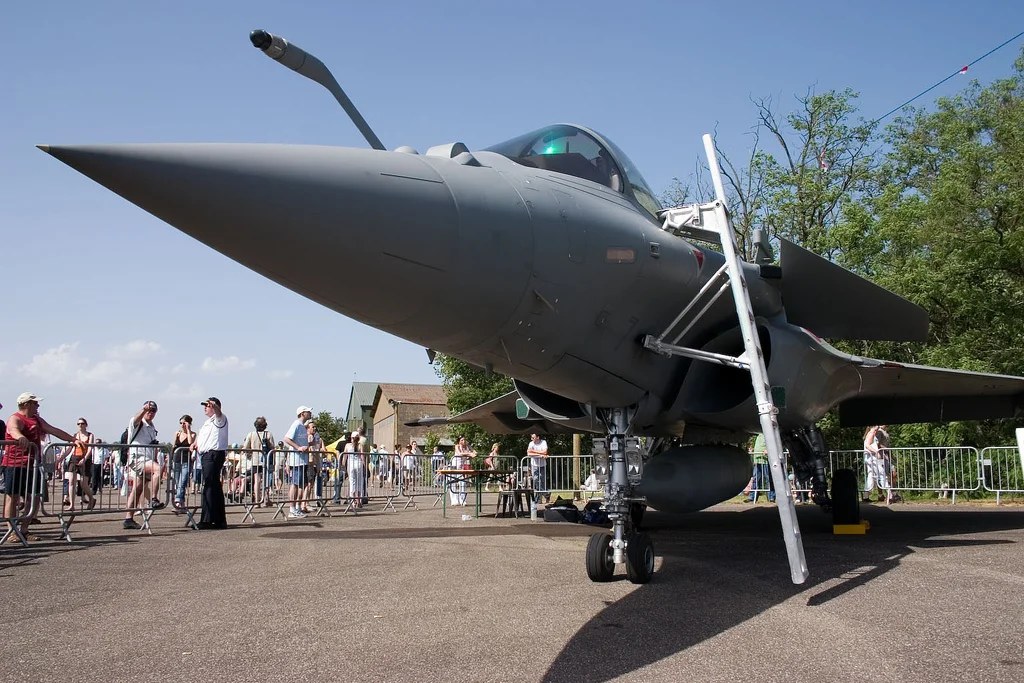
The original Greek order was for 18 aircraft in January 2021, followed by a further six in March 2022. Dassault documented the expansion to 24, and its 2024 annual report records that all 24 had been delivered. The procurement phase has therefore given way to a more practical question: how Greece sustains and employs the Rafale fleet as part of a wider air-defence network.
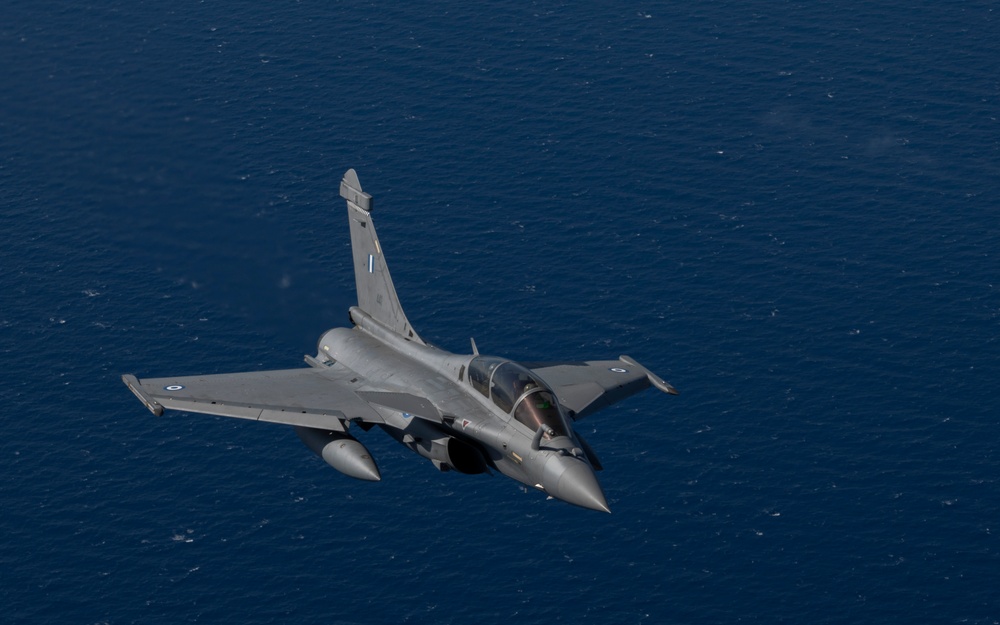
A retired Turkish Air Force officer, Osman Başıbüyük, offered a stark warning in an interview cited by Geopolitiki’s 2021 coverage: “Thanks to the AESA radar, the Rafale will detect the Turkish F-16 before the Turkish pilot can see it, resulting in the RAFALE locking it and thanks to the range of the Meteor missile, the Rafale will shoot down the F16 without the Turkish one being able to react.” He also forecast that “In a possible conflict, the Hellenic Air Force will have absolute air superiority.” Those are an officer’s assessment and a prediction, not a verified outcome of a Greek-Turkish engagement.
The limits of any numerical comparison
The Rafale’s advantage would be more consequential when combined with Greece’s F-16V upgrades, experienced crews, ground-based air defences and naval sensors. Yet an aircraft count by itself says little about sortie generation, maintenance, available missiles, dispersed basing or the ability to preserve communications under attack. Turkey’s F-16 force remains a combat-capable fleet and its modernisation effort must be considered in any current comparison. Describing it as obsolete merely because Greece fields 24 Rafales would obscure the central question: which side can generate and sustain a reliable tactical picture and repeated combat sorties?
The Aegean’s geography compresses reaction times and increases the importance of command and control. Rafale crews need timely tracks, identification and engagement authority; they also need the capacity to survive, refuel, rearm and return to the fight. Meteor provides a strong beyond-visual-range option, while SPECTRA and the Rafale’s sensors improve the crew’s ability to operate in a contested environment. Neither capability alone confers permanent or absolute air superiority.
A deterrent with operational requirements
For Athens, the strategic value of Rafale lies in raising the cost and uncertainty of a hostile air operation. Its radar and Meteor missile can complicate Turkish F-16 planning and create engagement opportunities at distance. The scale of that advantage will depend on training, network integration, ammunition stocks and the resilience of the entire Hellenic air-defence system. That is a stronger deterrent argument than treating any one aircraft or missile as a predetermined winner of a future war.
Related analysis: F-35 DAS and the future Greek air picture.