
Politics & Diplomacy
Two 14th-century icons stolen after the Turkish invasion returned to Cyprus
Two Byzantine icons of the Evangelists Matthew and Mark, stolen from Kyrenia after the 1974 Turkish invasion and traced to the United Kingdom, were repatriated to Cyprus, the Holy Metropolis of Morphou announced on October 9, 2026.

Two Byzantine icons of the 14th century, depicting the Evangelists Matthew and Mark, have been repatriated to Cyprus half a century after they were stolen and smuggled abroad following the Turkish invasion of 1974. The return was announced by the Holy Metropolis of Morphou on Friday, October 9, 2026.
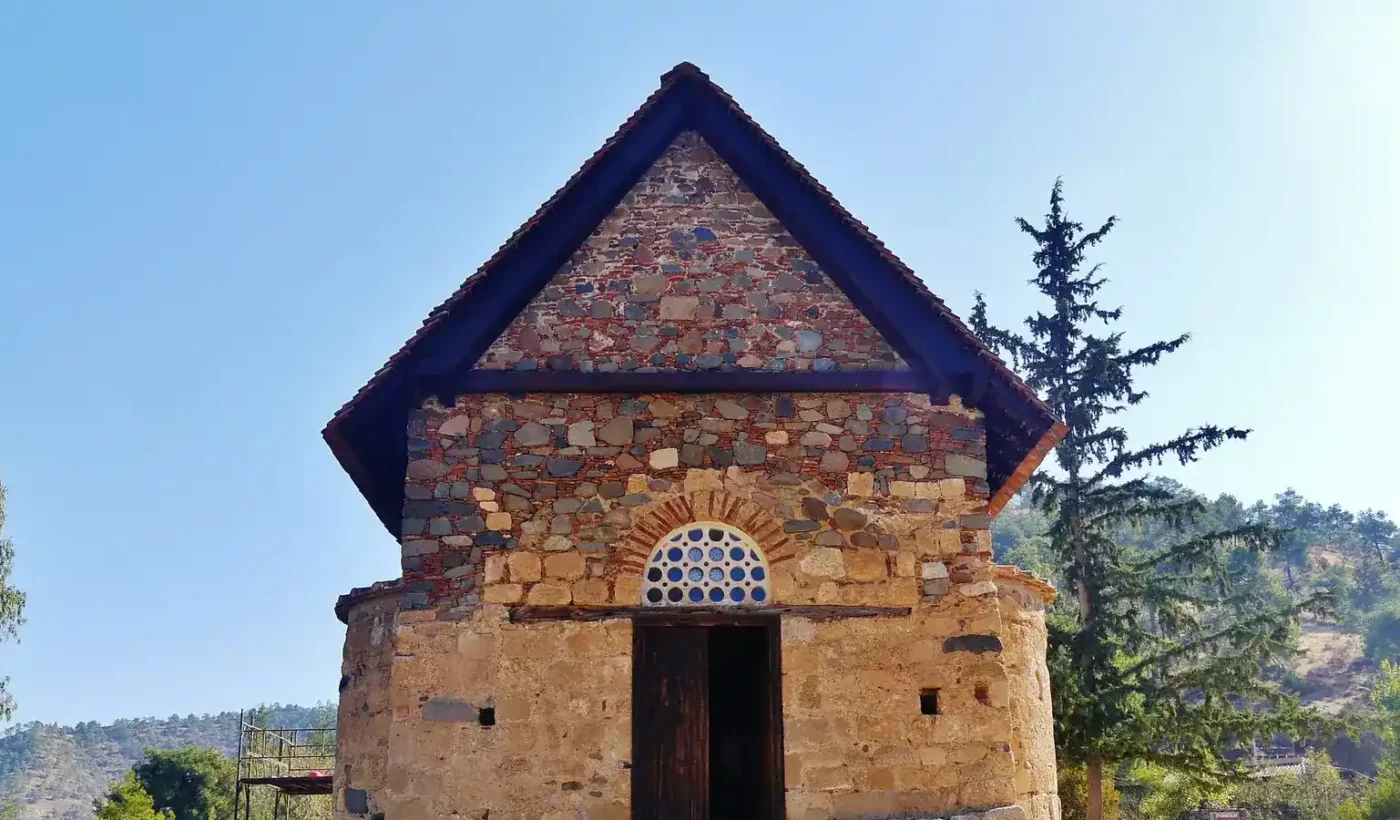
The icons come from the church of Panagia Phorviotissa at Asinou, a 12th-century church in the Troodos mountains. Before the invasion they had been moved to the residence of the Holy Metropolis of Kyrenia in Kyrenia, and from there they were stolen after the Turkish army took the town.

According to the announcement, the icons were located in the United Kingdom, their path was documented and the ownership rights of the Church of Cyprus were recognised. They were handed over to the Metropolis of Morphou without compensation, since their holder did not ask for payment.
The Church thanked the Department of Antiquities and its director Giorgos Georgiou, Police Chief Themistos Arnaoutis, Interpol, and the theologian and iconographer Giorgos Petrou for their help. The announcement also singled out the part played by Dr Christodoulos Hadjichristodoulou, a Byzantinist and adviser to the Metropolis of Morphou, Maria Paphiti, an art historian and former head of the icons department at Christie’s, and Bishop Porphyrios of Neapolis, with the lawyer Giorgos Hadjipieris handling the legal issues and coordinating the process.
The two icons belong to a series of works linked to the church at Asinou. Two more icons of the same series, of the Apostles Peter and Paul, were returned from New York in 2007. The icon of Christ has survived, while the works depicting the Virgin Mary, St John the Baptist and the Evangelists John and Luke are still being sought.
The church of Panagia Phorviotissa at Asinou, near the village of Nikitari, is one of the painted churches of the Troodos region inscribed on UNESCO’s World Heritage List, and is known for its frescoes dating from the early 12th century.
Decades of searching
The Metropolis of Morphou, which announced the return, has a large part of its diocese in the occupied areas, since the town of Morphou itself has been under Turkish occupation since 1974. The Asinou icons will now be kept in the free part of Cyprus, close to the church they come from. The Republic of Cyprus relies on international conventions, such as the 1954 Hague Convention for the Protection of Cultural Property in the Event of Armed Conflict and the 1970 UNESCO Convention, to claim works that were illegally removed from the island.
The Department of Antiquities of the Republic of Cyprus has been trying for decades to trace and return religious and cultural objects looted from churches and other sites after the invasion. Each repatriation requires documentation of the work’s provenance and path, to prove that it was illegally removed from Cyprus. With the return of the two Evangelists of Asinou, four works of the same series are still being sought, more than half a century after they were stolen from Kyrenia, in the occupied north.


