Cyprus
Cyprus tells the UN: Turkey’s “Akdeniz Arastirma 1” carried out research without permission in territorial waters and the EEZ
Cyprus brought before the UN Secretary-General the water sampling of the Turkish-flagged research vessel Akdeniz Arastirma 1, which operated in June and August inside Cypriot territorial waters and the EEZ without Nicosia’s permission.

The Republic of Cyprus has brought before the UN Secretary-General the research carried out by Akdeniz Arastirma 1, a Turkish-flagged research vessel that operated in June and August inside Cypriot territorial waters and the Exclusive Economic Zone without Nicosia’s permission. The letter, dated October 6, 2026, is signed by Cyprus’s Permanent Representative to the United Nations, Maria Michael, and was circulated on October 22 as official General Assembly document A/81/413.
Two sampling periods
According to the text, the vessel took water samples in two phases: the second half of June (June 15-30) and almost all of August (August 3-29), 2026. The sampling took place in the waters between the island and the Turkish coast, at points within the territorial sea and the EEZ of the Republic. The Cypriot mission attached two maps as Annexes I and II, one for each period. Nicosia stresses that Ankara neither requested nor received consent.
The UNCLOS articles Nicosia invokes
The vessel’s entry into territorial waters and the research there without Nicosia’s explicit consent constitute, in the Cypriot view, a violation of Cyprus’s sovereignty, which UNCLOS safeguards in Articles 2 and 3. Under Article 245, only Cyprus regulates, authorises and conducts marine scientific research in its territorial sea, and the Cypriot side adds that these provisions reflect customary international law.
For the EEZ and the continental shelf, the document refers to Article 56(1)(b)(ii), which recognises the coastal state’s exclusive jurisdiction over marine scientific research in its EEZ, and to Article 246(2), under which marine scientific research in the EEZ and on the continental shelf is conducted only with the consent of the coastal state. Nicosia’s conclusion is that Turkey has “no legal basis whatsoever” to conduct, authorise or facilitate research in Cypriot maritime zones.
What it asks of Guterres
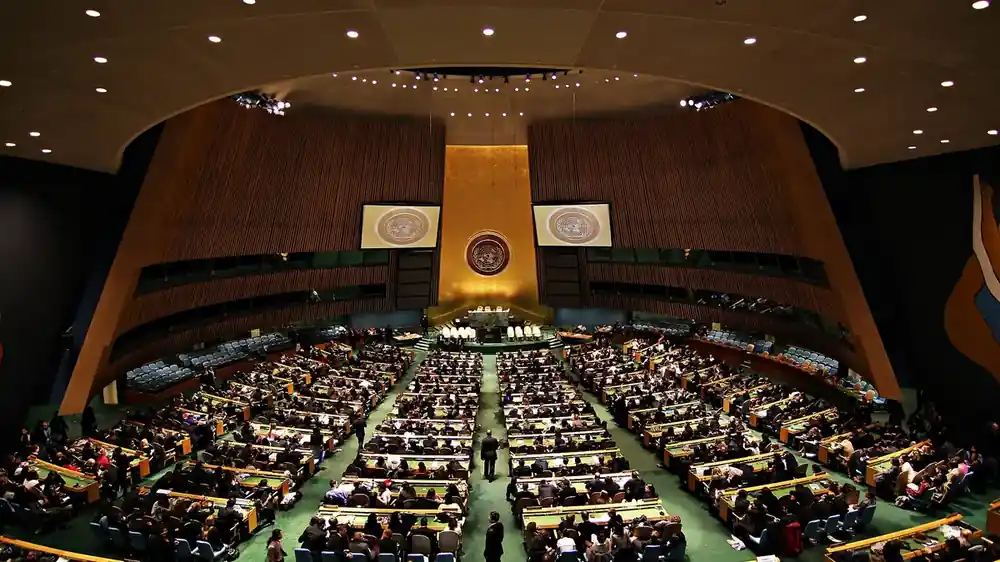
The Cypriot government asks the Secretary-General to convey to Ankara a clear message: to comply fully with what international law requires of it, to respect Cypriot sovereignty and jurisdiction, and not to conduct, authorise or facilitate marine scientific research in Cypriot maritime zones without Nicosia’s consent. It also asks that the letter and its annexes be circulated as a General Assembly document under agenda items 39 (“The situation in Cyprus”) and 74 (“Oceans and the law of the sea”), and be posted on the website of DOALOS, the UN division that handles oceans and law of the sea, and in the next edition of the Law of the Sea Bulletin.
Nicosia recently sent the UN another letter, on 626 Turkish violations of airspace in two months. The Turkish vessel’s activity comes as Turkey continues to occupy 37% of the territory of the Republic of Cyprus, an EU member state, in violation of UN Security Council resolutions.