
Asia-Pacific
Australia: US approves $300 million sale of Tomahawk mission planning centres
The US State Department has notified Congress of a possible $300 million Foreign Military Sale to Australia of Tomahawk Theater Mission Planning Centers and related communications systems. The package contains no new missiles.

Washington has approved the possible sale to Australia of mission planning systems for Tomahawk cruise missiles and related communications equipment, at an estimated cost of $300 million. The notification of the sale under the Foreign Military Sales (FMS) programme was published by the State Department on October 8, 2026 (transmittal no. 26-103).
What Canberra is buying
According to the notice, the Australian government has requested to buy Theater Mission Planning Centers (TMPC) and associated communications systems, together with the TMPC Mission Planning System (MPS). The package includes program management, engineering, training and logistics services. The notice does not say how many centres or systems Australia is requesting, and it does not include new missiles.
The principal contractors are BAE Systems (San Diego, California), Tapestry Solutions, a Boeing subsidiary (St. Louis, Missouri), Peraton (San Jose, California) and Leidos (Virginia Beach, Virginia). The State Department says the sale would improve Australia’s capability to meet current and future threats “by enhancing its Tomahawk capability, strengthening its ability to deter regional threats, and improving its homeland defense”, and would deepen Australia’s interoperability with US maritime forces and other allied forces.
Why mission planning matters
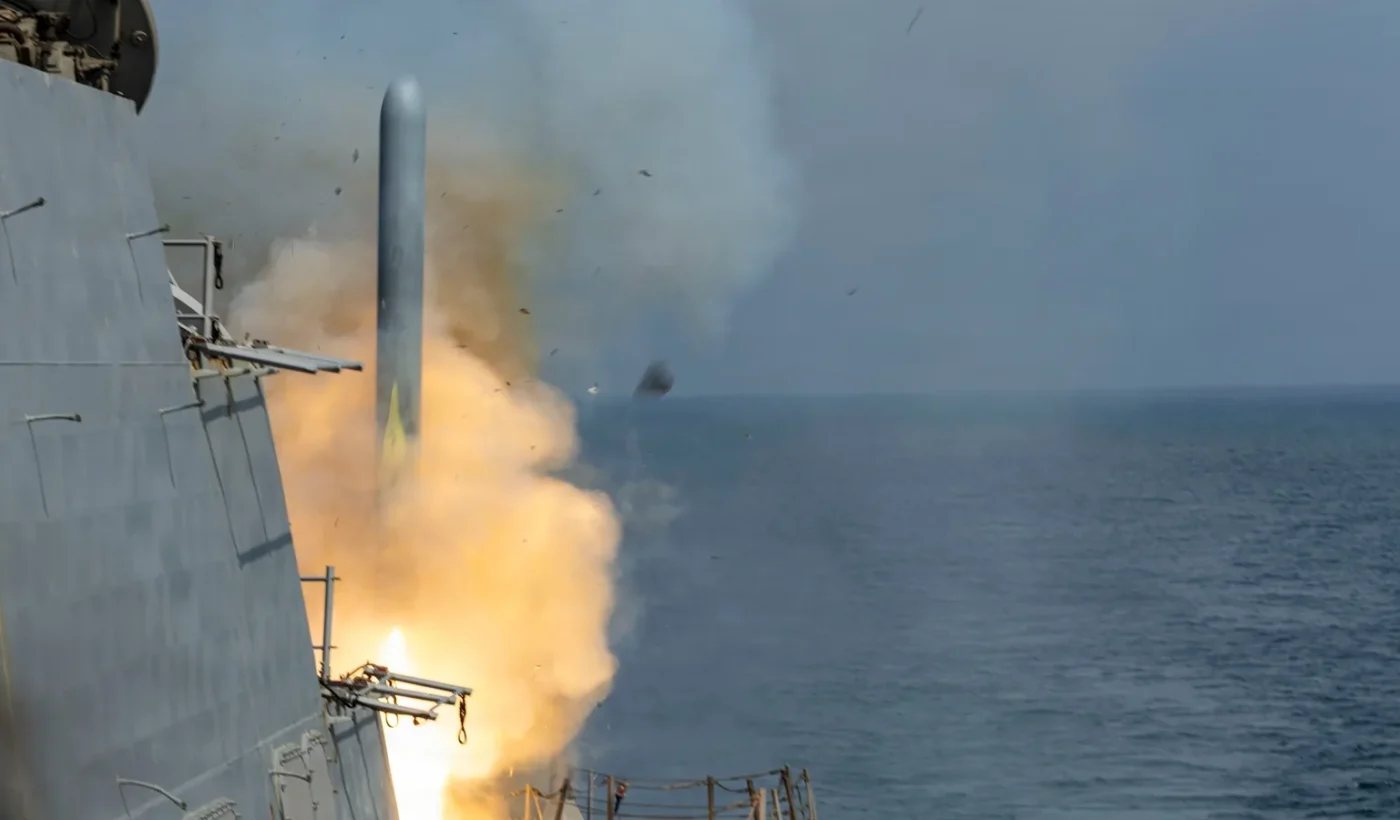
The Tomahawk is not simply a missile fired at a target. Each mission requires detailed route planning, based on digital terrain maps, information on the adversary’s air defences and targeting data. The TMPCs are the centres where this work is done. Acquiring them would mean the Royal Australian Navy could plan its own strikes, instead of depending heavily on US support. The importance of the weapon was shown in the war with Iran, where USS Abraham Lincoln and her group launched 450 Tomahawks.
Australia’s strike capability
The new approval adds to a series of purchases through which Australia is building a long-range strike capability. In August 2023 Canberra confirmed the purchase of more than 200 Tomahawk missiles for about A$1.3 billion, and in January 2024 Washington approved a further sale of about $250 million for support services. In December 2024 the destroyer HMAS Brisbane became the first Australian ship to fire a Tomahawk. Under AUKUS the missile is expected to arm the country’s future submarines as well.
For the United States, the spread of Tomahawk to close allies in the Indo-Pacific is part of its strategy of deterrence against China. At the same time, American industry is increasing its production of long-range weapons, as shown by the integration of the LRASM anti-ship missile on the B-52. The approval of the notification does not yet mean a signed contract, as negotiations between the two governments follow.


