Analysis
Analysis: SPYDER AIO, Rafael’s video of a UAV interception and what Greece gets with the “Achilles Shield”
Analysis: Rafael’s official video shows the SPYDER AIO shooting down a UAV from a single 8×8 truck. What the system is, how it works and what role it plays in Greece’s “Achilles Shield” air-defence programme.

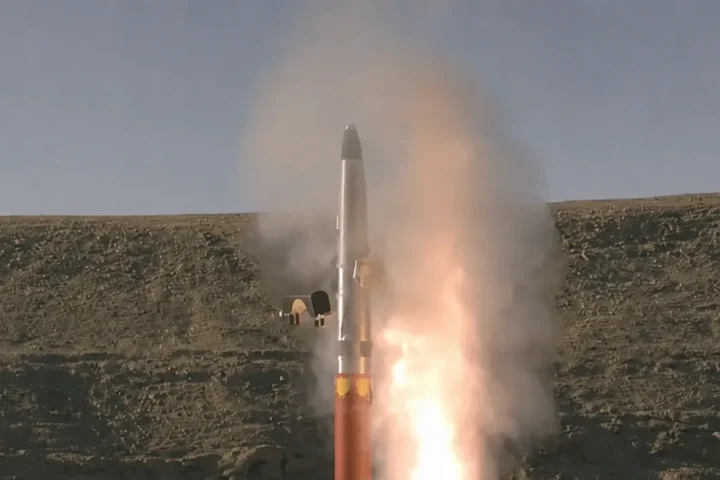
The SPYDER AIO may be the most “Greek” of the systems in the “Achilles Shield”, because it solves a problem Greek air defence has carried for decades: how to protect an island, a radar or a Patriot battery with something that fits on a single vehicle, deploys in minutes and takes little effort to operate. Rafael’s official video of the system’s live firing against an unmanned aircraft shows exactly that logic. An 8×8 truck drives along a dirt track, stops, raises its radar mast and launcher and fires, with no other vehicles around it.
The test was carried out in Israel by Rafael together with the Directorate of Defense Research and Development (DDR&D) of Israel’s Ministry of Defense, and the company announced it in January 2024. According to Rafael, the SPYDER AIO intercepted a UAV in a challenging operational scenario with a direct hit. The video shows the near-vertical launch from the canisters at the rear, with the missile turning immediately towards the target, which lets the vehicle cover 360 degrees without rotating its launcher.
What the SPYDER AIO is
Rafael’s SPYDER fires air-to-air missiles, originally designed for fighter aircraft, from the ground. In classic batteries the radar, command post and launchers are separate vehicles. In the All-in-One (AIO) configuration they all sit on one high-mobility 8×8 vehicle weighing about 30 tonnes with its missiles. On it are a four-panel AESA radar with 360-degree coverage, a Toplite electro-optical system for target identification and tracking, a command-and-control system with two operator stations in the cab, and a launcher for up to eight missiles. An AESA radar steers its beam electronically, with no rotating antenna, and can track many targets at once.

The vehicle works on a “search on the move, fire from a halt” principle. The radar scans the sky while the vehicle is moving, and when a threat is detected the system steadies itself on hydraulic legs, the radar mast extends and the launcher is raised. According to Rafael, going from movement to firing readiness takes about three minutes, and the same again to get back on the move. That matters against an adversary with drones, cruise missiles and loitering munitions, because a system that stays in one place for days becomes a target itself.
The missiles are the Python-5, with infrared guidance that “sees” the target’s heat signature, and the I-Derby, with its own active radar seeker in the nose. Both are fire-and-forget, finding the target by themselves in the final phase. With the I-Derby ER, Rafael gives a range of up to 40 km and an engagement altitude of up to 12 km. Combining two different guidance sensors makes things harder for an adversary, who has to “blind” infrared and radar at the same time.
Its role in the Achilles Shield
In the Greek architecture the SPYDER AIO is the mobile lower layer beneath David’s Sling and the Barak MX. Together with counter-drone assets such as Kentavros and Drone Dome, it takes whatever gets past the outer layers: drones, helicopters, low-flying aircraft and guided munitions. In practice, one AIO can cover a Patriot or Barak MX battery against threats that are not worth an interceptor costing several million, or protect an airport, a port or a radar on an island where there is no room for a whole battery. Some of the Greek SPYDERs will be deployed on islands to replace the TOR M1 and OSA AK.

NemesisHD wrote as early as 2023 that the SPYDER AIO is the ideal replacement for the Russian-made air-defence systems of the armed forces, and its selection for the Shield follows that line. The critical issue now is not the vehicle but networking: the real value of each AIO will depend on how well it “talks” to the new national command-and-control system, a subject NemesisHD has examined in its piece on the Shield’s source code. The SPYDER family also continues to evolve. In July 2026 Rafael showed in live firings the new SPYDER ER (40 km) and SPYDER LR (80 km) versions, with upgrades to target classification and to command and control. These are not the versions Greece bought, but the improvements in software and in the I-Derby ER apply to the whole family. Rafael also says SPYDER has been selected by European countries such as the Czech Republic and Romania, which means a shared supply base and user experience inside NATO.
The official video of the SPYDER AIO live firing against a UAV, by Rafael and DDR&D of Israel’s Ministry of Defense, is on Rafael’s YouTube channel. Rafael’s own announcement of the test is reproduced by ASDNews.
Frequently asked questions about the SPYDER AIO
What is the SPYDER AIO?
It is the All-in-One configuration of Rafael’s Israeli SPYDER air-defence system. A 360-degree AESA radar, an electro-optical system, command and control and a launcher for up to eight missiles are all on one 8×8 vehicle, which can operate alone or inside a battery.
Which SPYDER is Greece getting?
The SPYDER AIO, as the mobile lower layer of the “Achilles Shield” alongside David’s Sling and the Barak MX, under the agreement of August 31, 2026. The SPYDER ER and LR that Rafael tested in July 2026 are not part of the Greek selection.
Which missiles does the SPYDER AIO use?
The Python-5 with infrared guidance and the I-Derby with an active radar seeker. With the I-Derby ER, Rafael gives a range of up to 40 km and an engagement altitude of up to 12 km.
How quickly does it get into firing position?
According to Rafael, in about three minutes from movement, and another three to move off again. The radar scans even while the vehicle is moving.
What does Rafael’s video show?
The test of the SPYDER AIO with DDR&D of Israel’s Ministry of Defense, announced in January 2024, in which the system intercepted a UAV in a challenging operational scenario with a direct hit.